Specialist dry ice blasting support for food production cleaning, planned around your equipment, residue, access limits and site controls.
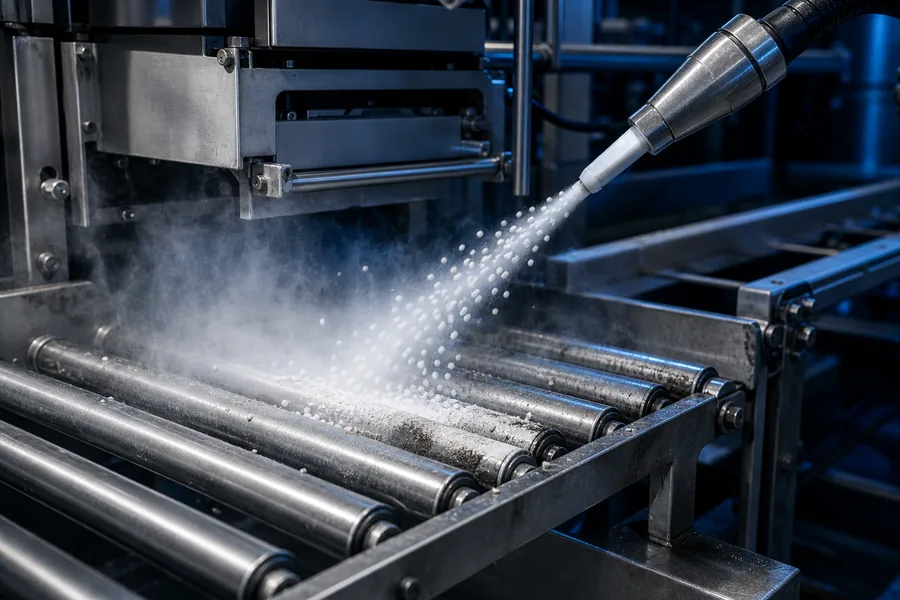
Gransden provides food production cleaning support for food production facilities, food factories, food manufacturers and food manufacturing facilities that need a dry, low-residue cleaning process around production machinery, packaging areas and production lines.
For food factory cleaning, the team reviews food processing equipment, access routes, residue type and surface suitability before recommending dry ice blasting. That keeps food production cleaning focused on the agreed equipment rather than making broad hygiene promises.
Dry ice blasting can support deep cleaning, production cleaning and equipment cleaning where grease, carbonised deposits or decomposing food matter slow normal cleaning. It does not replace sanitation, pest control, legal release checks or your site’s documented food safety standards.
Food production sites often use the method during shutdowns, maintenance windows or changeovers. The aim is to help food factories remove difficult visible build-up while their own team controls isolation, hygiene checks and handback.
Food factories with several work zones can split the scope by line, equipment group or residue type. For food factories, this makes the visit easier to brief before production restarts.
A useful food production cleaning scope includes machine names, photos, food production facilities involved, working height, nearby services, drainage concerns, ventilation notes, collection points and the person responsible for acceptance.
Food production cleaning services can be planned around food production facilities, equipment access, production schedules and the site team’s own food safety standards. Gransden’s cleaning services support visible residue removal, not internal sign-off.
This helps food factories when normal manual work is slow, when water would create drying delays, or when deep cleaning needs a dry specialist step around guards, frames, moulds, belts and machine edges.
Food factories also benefit when deep cleaning services and other cleaning services are scoped against poor hygiene risks caused by visible residues, trapped ingredients or difficult access.
The examples below show where food factory cleaning, production cleaning and deep cleaning services may help after a site review.
01
Where your site authorises work close to sensitive surfaces, dry ice blasting can help lift residue from adjacent frames, guards and supported panels before the final site checks are completed. It is best discussed in advance so the site lead can define exclusions, access routes and handback requirements.
02
Food production lines, belts, frames and guide rails can collect food products, grease and loose debris during the manufacturing process. A dry method can help maintenance teams deal with those deposits during planned access windows, especially when drying time and secondary clean-up need to be kept under control.
03
Mixers, ovens, moulds and food processing equipment can be reviewed for dry ice access where hand cleaning methods struggle with edges, recesses and baked-on deposits. The survey should confirm equipment cleaning needs, surface suitability, guarding, electrical sensitivity and dismantling before any cleaning starts.
04
Dry ice can support production cleaning and food factory cleaning where labels, adhesives, dried ingredients and other deposits build up around packing equipment. This works best where food factories can isolate the area, control loose debris and collect removed material.
05
If cleaning is close to a key control point, the work should be planned with your site lead so safety risks, isolation, food safety standards and handback are clear. Gransden can explain the blasting method, while the food business operator remains responsible for release decisions and documented controls.
06
Dry goods, storage areas and wall junctions can be assessed when visible dirt, loose product or product contamination risks need careful removal. These areas often need slower planning because access, dust control, stored materials and nearby operations can affect deep cleaning services and the safest approach.
A food production cleaning visit should be planned around access, shift patterns and operational requirements, so food factory cleaning supports the production schedule rather than disrupting it unnecessarily.
Before attendance, it helps to share photographs, machine names, residue type, available working hours, production lines affected, power and compressed-air restrictions, and any areas that must not be touched.
Clear preparation helps food factories and food manufacturers avoid guesswork on the day. It keeps production cleaning focused on agreed surfaces, practical access, waste collection and site handback.
1
Confirm the equipment, residues, food production areas, access restrictions and any hygiene standards or inspection standards the site needs to protect. The survey should record the food production facilities involved, what will be cleaned, what will be protected, what will be excluded, and what evidence the site team wants at handback.
2
Agree the machinery cleaning area, nearby food products, electrical sensitivity, loose debris and cross contamination controls before work begins. Isolation, sheeting, waste collection points and access routes should suit food manufacturing operations and the production cleaning window.
3
The dry ice cleaning process uses dry ice and controlled air pressure to lift build-up without adding water, grit or secondary blasting media. Operators work to the agreed scope and adjust technique around the surface, deposit and access constraints rather than treating every machine in the same way.
4
After cleaning, the team can support your handback record with visual checks and handback notes before your own cleaning and hygiene sign-off procedures continue. Any remaining access limits, stubborn deposits or excluded surfaces should be explained clearly so follow-up work is easier to plan.
Food manufacturing sites often need a high standard of deep cleaning before inspections, maintenance windows, product changes or a return to production. Dry ice blasting can form part of that plan where dry, detailed residue removal is useful.
It can support food factory cleaning without promising sterilisation, pest control or legal compliance. Those responsibilities remain with the site’s own hygiene procedures, good manufacturing practices and food safety management system.
For food manufacturing teams, the strongest use case is targeted food factory cleaning around production facilities where residue, grease or trapped material is slowing normal cleaning. The method can support deep cleaning services when it is planned as a specialist residue-removal step, not as a replacement for sanitising or formal release checks.
Food production facilities are rarely identical, even when the equipment looks similar. Build-up type, operating temperature, surrounding packaging, access height and available downtime all affect whether dry ice is the right option. A careful plan is more useful than a generic promise that one method will suit every surface.
Gransden can also help food factories decide whether the task belongs in a shutdown, a maintenance window, or a separate deep cleaning visit. That gives the site time to organise people, permits, isolation and post-clean checks before production restarts.
For larger sites, the same visit may need several work zones with different priorities. One area might need gentle residue removal around frames, another may need more time on carbonised deposits, and another may be excluded because access is unsafe. Splitting the scope in this way keeps expectations realistic and helps the site team brief production, engineering and quality colleagues before the clean.
✓
Production lines residue removal around food processing equipment
Schedule dry ice work around planned shutdowns, cleaning schedules and maintenance windows. Routine deep cleans benefit from a simple scope sheet that lists surfaces, access notes, exclusions and the person responsible for final acceptance.
✓
Food factory cleaning support during planned downtime
Use the method as practical cleaning support where poor hygiene risks are linked to residue, grease or trapped material. It can remove visible build-up that makes normal cleaning harder for food factories, while sanitation, pest control and release checks remain with the site.
✓
Deep cleaning services for food manufacturing facilities
Assess production facilities, packaging zones and food production facilities without assuming one method suits every surface. Food manufacturing teams and food manufacturers may need an alternative approach, partial strip-down or a smaller test area first.
✓
Equipment cleaning with clear food safety standards
Keep handback evidence clear so your own team can complete food safety, hygiene compliance and quality checks. Practical notes on production cleaning limits, remaining deposits and completed surfaces are often more useful than broad claims about cleanliness.
Dry ice blasting works best as a targeted cleaning service for food production cleaning and residue-removal problems, especially where the production process needs a dry method and a clear site survey before work begins.
It is not the right answer for every hygiene task. If a job needs chemical contact time, microbiological validation, pest treatment, equipment repair, or formal legal sign-off, those controls should stay with the relevant site team or specialist provider.
The best enquiries are specific. Tell Gransden what has built up, how often the issue returns, which machines are affected, whether food factory cleaning can wait for a shutdown, and what a successful handback should look like.
Good fit: Residue, grease, carbon or dried ingredient build-up on supported equipment, including food processing equipment that has been reviewed for access.
Needs site review: Heavy contamination linked to pest infestation, stored product insects or biological risk needs the site’s specialist controls first. Dry ice may still help later, but only after the source risk has been handled by the right team.
Good fit: Dry cleaning support where water use or long drying times would affect food production, food manufacturing or the production process.
Needs site review: Tasks that require contact times, chemical dosing or formal disinfection services should stay with the appropriate hygiene provider. Dry ice can remove visible deposits, but it does not replace validated chemical or microbiological steps.
Good fit: Detailed access around machinery, frames, guards, wall junctions, packing equipment and production lines.
Needs site review: Loose components, damaged machinery or surfaces unsuitable for blasting need a site survey before cleaning. It is better to exclude a risky area than to force the wrong method onto a delicate component.
Good fit: Pre-inspection preparation where visible residues must be removed before internal checks in food factories.
Needs site review: Any legal requirements, HACCP principles or site approvals remain the responsibility of the food business operator. Gransden can support the cleaning task, while your site keeps ownership of standards, records and release decisions.
It can be considered near authorised contact areas only where the site approves the work and the surface is suitable. Final safety checks, standards and release procedures remain with your team.
Yes. Site survey notes, shift patterns and planned timetables help organise the work around shutdown windows, production downtime and access restrictions. Early planning also helps confirm which team will isolate equipment, collect residues and complete final checks.
Dry ice turns to gas on impact, so the process does not add water, sand or grit. The removed food waste, grease or residue still needs to be collected through your normal site procedure.
It can support routine deep-clean visits, deep cleaning and production cleaning for production machinery, line equipment and difficult access areas where a dry method is useful. The best results come from a clear scope, realistic access, and a handback process your site already understands.
No. It is a specialist cleaning service that can support preparation for hygiene checks, food production cleaning and food factory cleaning, but it does not replace your safety management, sanitising, pest control or inspection sign-off duties. Treat it as a practical residue-removal tool within your wider site process.