
For businesses, contractors and property owners searching for ice blasting Liverpool, Gransden Dry Ice Blasting provides a controlled cleaning method for a wide range of sectors, not just automotive work. Dry ice pellets are accelerated by compressed air to lift grease, coatings, carbon, soot, residue, dirt and other contamination without introducing water or leaving spent blast media behind. Because the pellets sublimate on impact, only the removed material is left to collect, making the process useful where moisture, abrasive grit or chemical residues could cause problems.
For marine antifouling removal, dry ice blasting can help strip hull coatings while reducing the mess associated with conventional removal methods. For automotive cleaning, it can clean engine bays, undercarriages and components while helping preserve original finishes, labels, seals and wiring. For aviation, it offers a careful, low-residue cleaning option for suitable components and assemblies. For beam cleaning restoration, it can remove soot, paint and built-up grime while helping retain the character of the timber. For brickwork and stone, it can clean staining, surface dirt and residues while respecting texture and detail. For food production environments, it can remove grease, product build-up and residues with minimal secondary waste.
The technique can be adjusted to suit the surface, access and contamination, from heavier industrial deposits to more delicate restoration work. It is often chosen where dismantling, drying time, abrasive damage or chemical clean-up need to be kept to a minimum, giving customers across the Liverpool area a practical option for precise, site-specific cleaning.

For ice blasting Liverpool projects, dry ice cleaning can help remove contamination without adding water, grit or chemical residue. It is used across industrial cleaning, marine antifouling removal, brickwork stone cleaning and food production environments where access, surface condition and careful inspection all matter.
Controlled dry ice blasting can help remove grease, dust and production buildup from industrial equipment, giving maintenance teams a clearer surface to inspect before repair, servicing or further preparation.
For brickwork, stone and beam cleaning restoration, dry ice blasting can lift surface contamination while avoiding added slurry or trapped abrasive media that may complicate later restoration work.
Dry ice blasting can support marine antifouling removal by helping lift loose coatings and marine buildup, leaving a clearer surface for inspection before repair, recoating or further preparation.
After fire damage, ice blasting can help remove soot and smoke-related deposits from suitable surfaces, supporting assessment, documentation and the next stage of restoration planning.
Dry ice blasting is suited to many cleaning and restoration tasks where moisture, grit or chemical residue would be undesirable. For customers seeking ice blasting Liverpool services, the method can support automotive work, aviation cleaning, historical restoration cleaning and printing paper industry cleaning with a controlled, surface-led approach.
Each job is reviewed around the material, contamination, access, nearby components and intended finish before dry ice cleaning begins.
Dry ice blasting removes contamination, but it does not repair damaged materials, replace missing coatings or disguise underlying defects.
The process helps remove grime, soot, grease, loose coatings and residues without leaving slurry, trapped grit or lingering chemical contamination.
Once contamination is reduced, owners, site teams and trade customers can inspect surfaces more clearly and plan the next practical step.
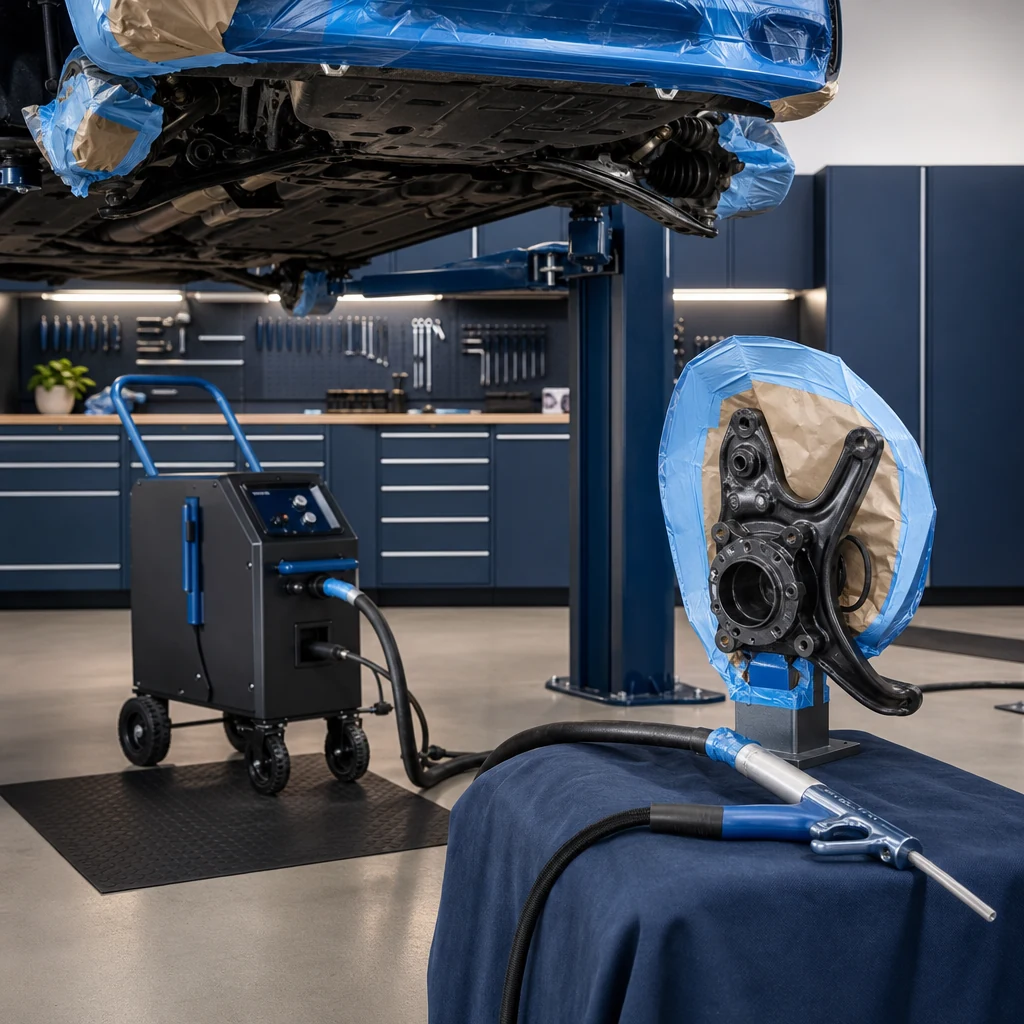
Before an ice blasting appointment in Liverpool, the work is planned around the surface, contamination and desired outcome. Access, sensitive materials and site conditions are reviewed so cleaning can be controlled for applications such as aviation, automotive and industrial cleaning.
Ice blasting does not have to mean a whole site or full asset clean. Defined work areas, components, beams, machinery sections or coated surfaces can be cleaned before inspection, repair, refinishing or reassembly.
For customers comparing ice blasting Liverpool services, starting with the material and contamination type helps set realistic expectations. This is useful for brickwork stone, automotive, aviation and historical restoration cleaning.
Before dry ice blasting begins, the surface, access, coatings, seals, ventilation and contamination are reviewed. For ice blasting Liverpool work, this preparation helps the team understand priorities, caution points and the equipment or site conditions needed for a controlled appointment.
Materials, coatings, access, surrounding areas and contamination are reviewed before cleaning so the team can identify priorities and any areas requiring extra caution.
Where dry ice cleaning involves enclosed or active work areas, ventilation, housekeeping and safe handling are considered before work starts.
Technicians may check dry ice pellets, hoses, compressor supply, lighting and extraction before cleaning begins.
These checks support a cleaner workflow and help the appointment begin in a structured way, with the surface and site conditions understood from the outset.
After ice blasting Liverpool work has lifted grease, soot, loose coatings, antifouling or production residue, the cleaned area can be assessed before repair, coating, documentation or reassembly. This helps customers plan practical next steps across industrial, marine, restoration and specialist cleaning projects.
For suitable aviation components, dry ice blasting can help remove surface contamination so areas can be inspected more clearly before maintenance decisions are made.
In food production settings, dry ice cleaning can support clean-down tasks where reducing added moisture and secondary waste is important to the wider maintenance plan.
For printing and paper industry cleaning, ice blasting can help remove ink, dust and process buildup from suitable areas, supporting clearer inspection and planned maintenance.
For historical restoration cleaning, a cleaned test area or defined surface can provide a practical starting point before broader conservation or repair decisions are made.