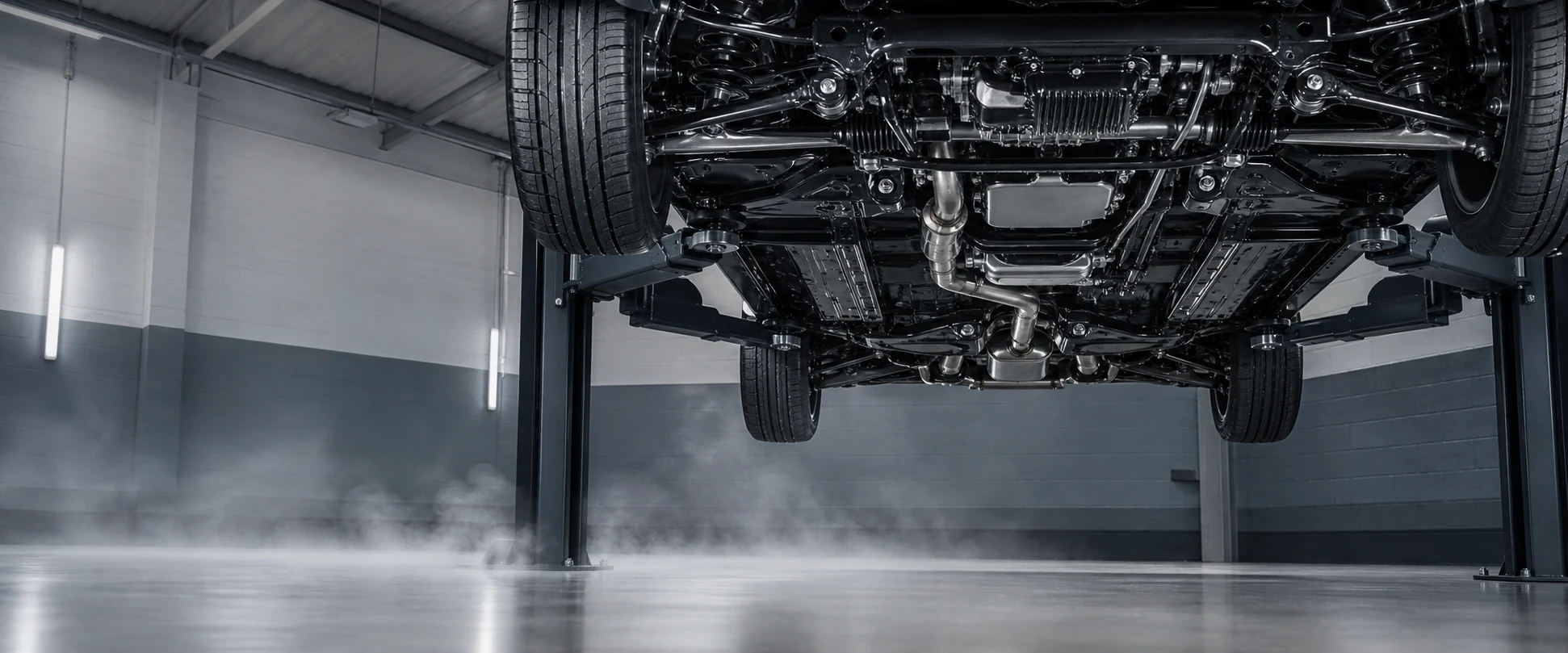
Vehicle undersides collect the kind of contamination that ordinary surface cleaning rarely reaches properly. Road film, grease, oil mist, mud, old coatings and compacted residue can gather around suspension parts, seams, brackets, fixings, engine bays and undertrays.
Dry ice blasting gives workshops, restorers and vehicle owners a controlled way to clean these areas without soaking components or cutting into sound surfaces with harsh abrasive media. It is a technical process, but the basic idea is simple: clean the contamination, preserve the substrate and leave very little secondary waste behind.
Why vehicle undersides need a careful cleaning method
The underside of a vehicle is not one simple flat surface. It is a mix of painted metal, factory coatings, underseal, rubber parts, clips, brake lines, pipes, wiring, fasteners, castings and cavities. Some areas are robust, while others need a lighter touch. A good cleaning method has to remove unwanted build up while respecting the different materials underneath.
Traditional wet washing can shift loose dirt, but it also introduces water into areas where moisture is not always welcome. Water can sit in seams, around fixings and inside hidden recesses. Detergents may also need rinsing, collection and drying time. For routine washing that can be fine, but for inspection, restoration preparation or detailed automotive cleaning, workshops often need something more precise.
Abrasive blasting can be useful in the right setting, but it is designed to abrade. On a vehicle underside, that can be too aggressive for delicate edges, original finishes, rubberised coatings or detailed components. Dry ice cleaning is different because the pellets strike the contamination and then turn back into gas. The process removes deposits through impact, cooling and rapid release, without leaving spent grit behind.
How dry ice blasting works on underside contamination
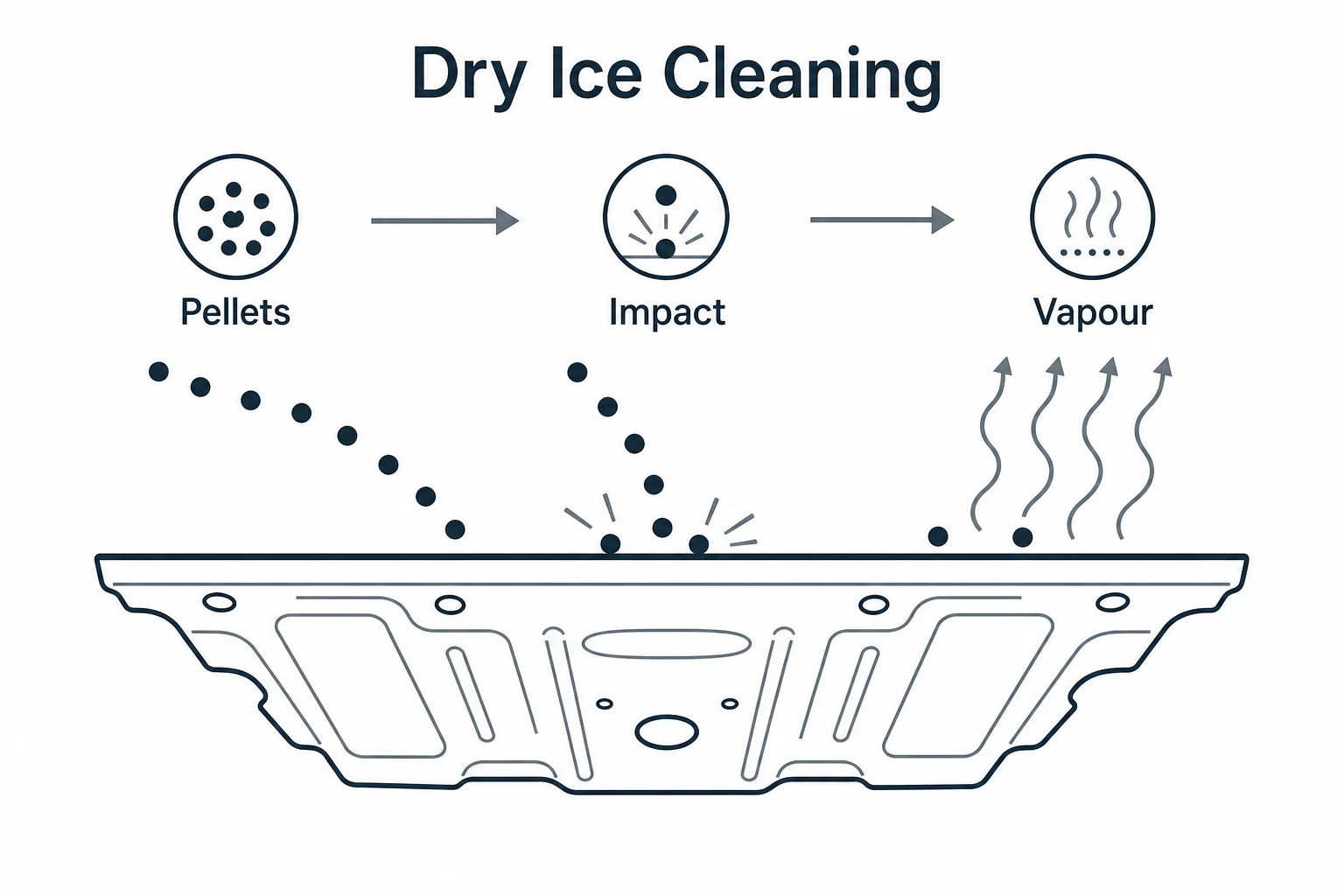
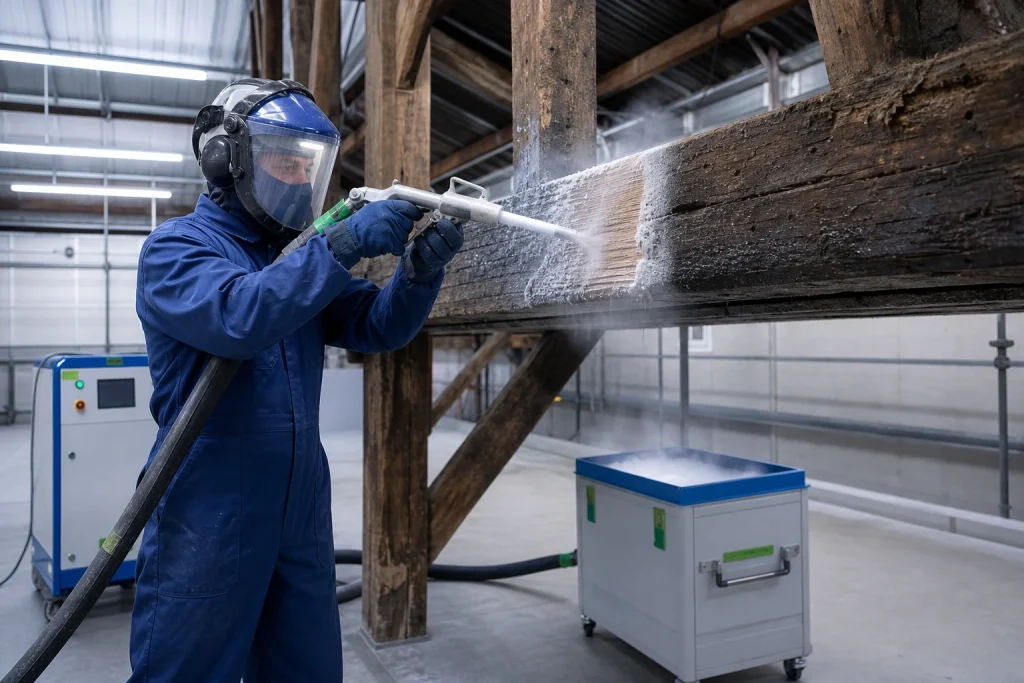
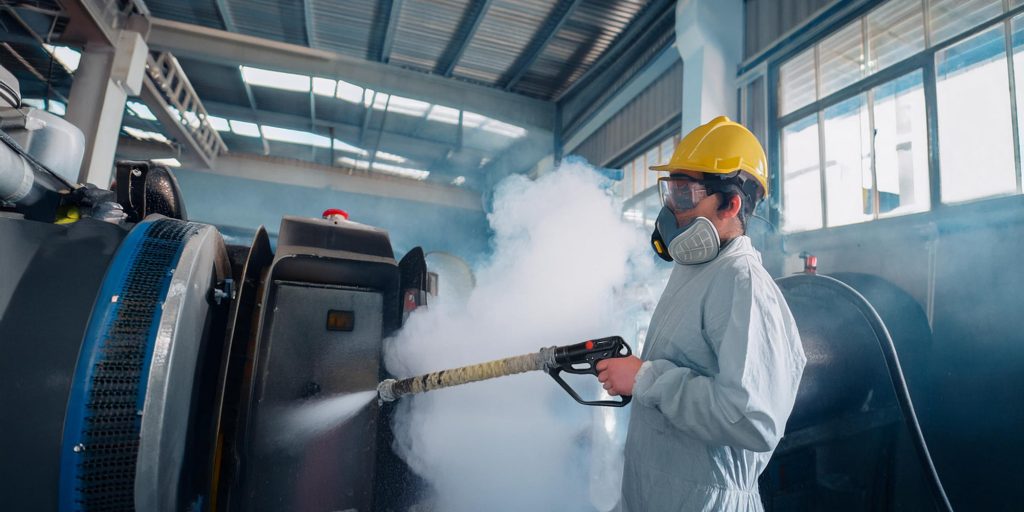
Dry ice blasting uses solid carbon dioxide pellets carried in a stream of compressed air. When the pellets hit the surface, they cool the contamination rapidly. This can make dirt, grease, oily residue and certain coatings more brittle. The impact then helps break the bond between the unwanted material and the surface beneath.
The dry ice then sublimates, which means it changes from solid to gas. Because the blasting media disappears, the main waste is the material removed from the vehicle. That matters when cleaning an underside, because there are already enough angles, trays, recesses and component edges to manage without adding loose grit or wet slurry.
For automotive work, the operator can adjust the method to suit the job. Pellet size, air pressure, flow rate, nozzle choice and working distance all affect how the process behaves. A heavily soiled axle carrier may need a different approach from a painted chassis section or a delicate engine bay area. This is why experienced dry ice blasters assess the vehicle before cleaning rather than treating every underside as the same.
Gransden Ice Blasting explains this wider approach on its automotive dry ice blasting service, where the focus is on engines, undercarriages and components that need precise cleaning without unnecessary mess.
What dry ice can remove from vehicle undersides
Vehicle underside contamination varies depending on age, use, storage and previous repairs. Dry ice blasting is commonly chosen for built up road dirt, oily film, grease deposits, mud, loose paint, loose corrosion products, adhesive residue and ageing underbody coatings where removal is appropriate. It can also help expose details that are difficult to inspect when everything is hidden beneath dirt.
This is especially useful before mechanical work, restoration planning or underside detailing. Clean surfaces make it easier to see the condition of fixings, seams, mounts, brackets and metalwork. A cleaner underside can also make future maintenance more pleasant, because technicians are not fighting through layers of residue before reaching the part they actually need to work on.
Dry ice cleaning is not a magic repair process. It does not replace welding, corrosion treatment, repainting or mechanical restoration where those are needed. What it does well is reveal the true condition of the surface and remove contamination in a controlled way. That clarity can help owners and workshops make better decisions about what should be preserved, what should be repaired and what should be left undisturbed.
Why non abrasive pellets matter
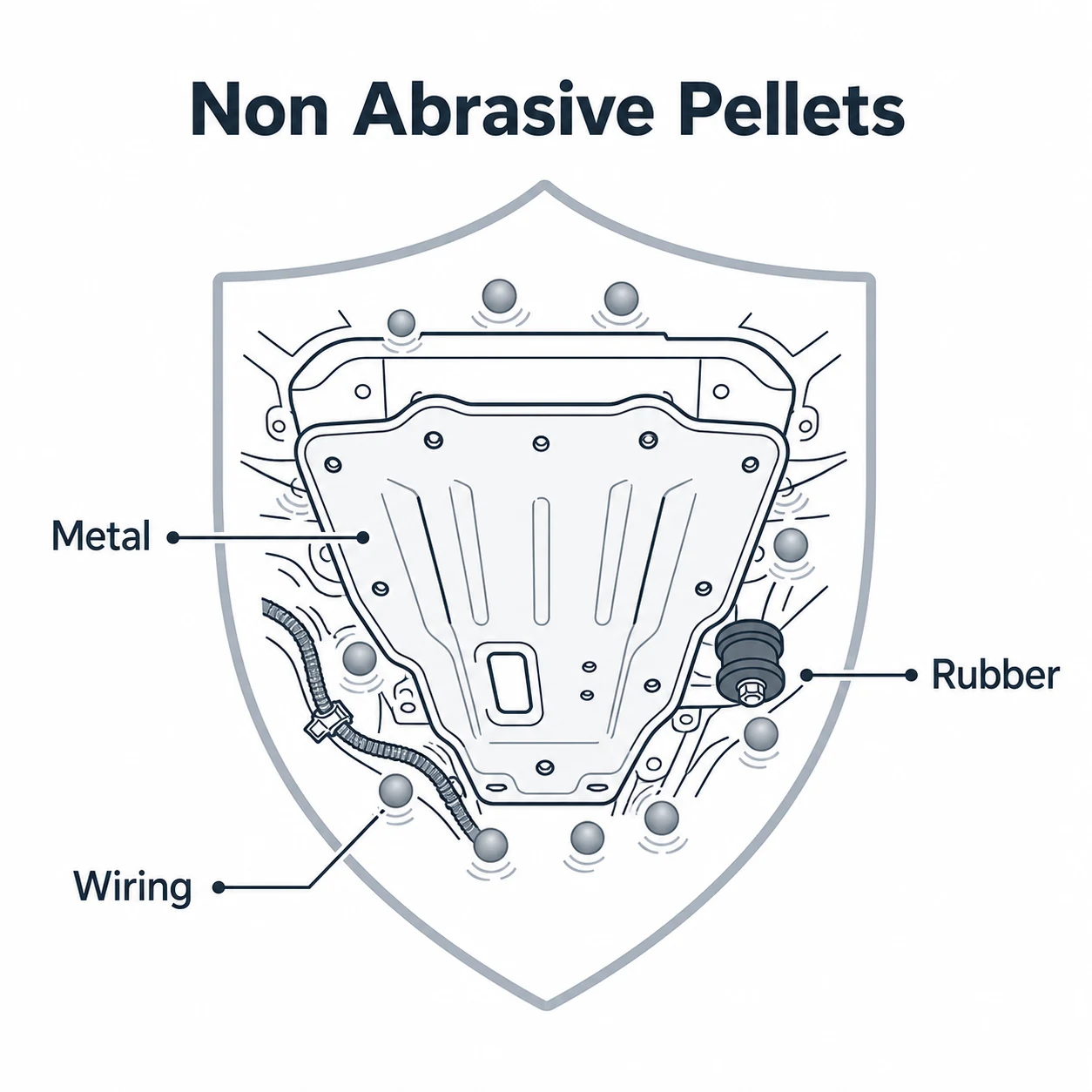
The phrase non abrasive cleaning pellets is important because it describes one of the main reasons people choose dry ice blasting for vehicle undersides. The aim is not to grind away the base material. The aim is to remove the layer sitting on top of it.
On the underside of a vehicle, that distinction matters. Some surfaces have factory finishes that owners may want to retain. Some components have labels, texture, casting marks or original detail that could be damaged by aggressive media. Rubber, plastic and wiring also need careful handling. A skilled operator will still avoid unsuitable areas or reduce intensity where needed, but the nature of dry ice gives them a highly controlled cleaning option.
Because the media does not stay behind as grit, it also reduces the risk of trapped abrasive material in corners, brackets and cavities. That is a practical advantage for automotive work, where access can be tight and post clean removal of residue can be awkward. It also helps when the goal is a cleaner, more inspectable underside rather than a stripped surface.
The same principle is valuable across many settings where machinery, components and surfaces need controlled cleaning. For example, Gransden Ice Blasting also applies dry ice methods in industrial cleaning, where reducing moisture and secondary waste can be just as important as cleaning power.
Where dry ice cleaning helps most in automotive work
Dry ice blasting is often chosen when the underside needs more than a cosmetic wash. Restoration projects can use it to remove layers of grime so the original condition is easier to assess. Performance and classic vehicles may benefit when owners want detailed cleaning without unnecessary dismantling. Workshops may use it before inspection, repair or presentation work where a dry process is preferable.
It can be useful around wheel arches, suspension assemblies, chassis sections, undertrays, gearbox casings, engine areas, subframes and brackets. The operator will decide what is suitable based on the material, condition and objective. Some coatings may be deliberately retained, while others may be removed if they are failing, contaminated or no longer wanted.
Preparation still matters. Loose items, sensitive openings and vulnerable components should be identified before cleaning begins. The vehicle may need lifting securely so the operator can work at the right angle. Areas that should not be blasted can be protected or avoided. Good dry ice cleaning is not just about the machine. It is about judgement, access, control and knowing when to vary the technique.
How it compares with wet washing and abrasive blasting
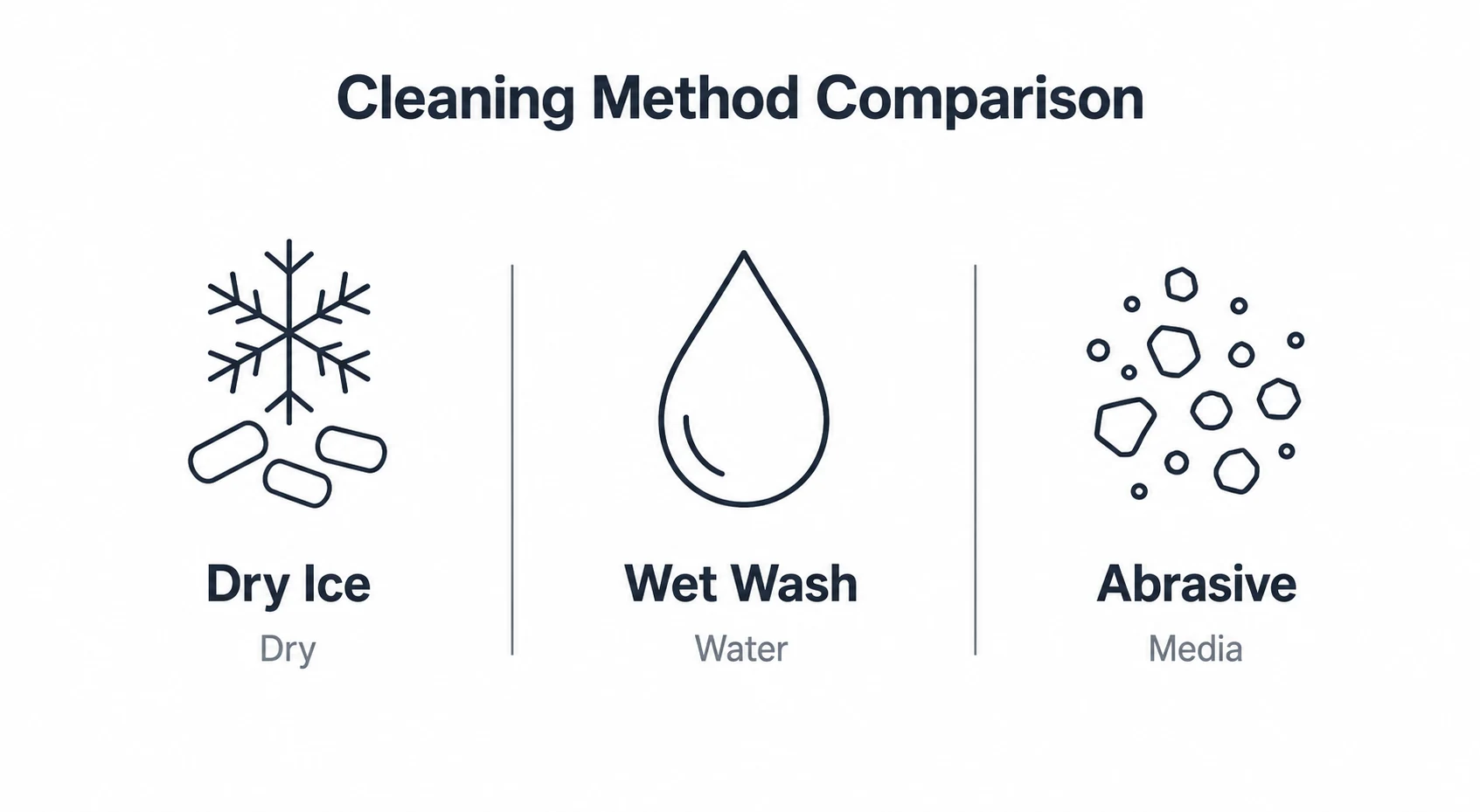
Wet washing can be useful for routine dirt, but it relies on water, detergent and drying. It may not shift stubborn grease or aged residue, and it can leave moisture in places that are difficult to dry fully. For vehicles that need careful inspection or restoration preparation, that can be a limitation.
Abrasive blasting can remove tough coatings and corrosion, but it is a stronger intervention. It can alter surface texture and may require significant masking, clean up and follow on finishing. It has its place, but it is not always the right choice when the goal is to clean rather than profile or strip.
Dry ice blasting sits in a different category. It is dry, targeted and non abrasive to the underlying surface when correctly specified and operated. It can remove contamination from complex shapes while leaving the operator with less secondary media to clear away. For many vehicle undersides, that combination is what makes the process so useful.
The best choice still depends on the vehicle, the surface condition and the desired result. A professional assessment should consider what needs to be removed, what needs to be protected and what finish the owner or workshop expects after cleaning.
- Dry ice blasting removes underside dirt, grease and residues without relying on wet washing.
- The pellets turn back into gas, so there is no spent grit or wet slurry left in tight underside areas.
- A skilled operator can adjust pressure, nozzle choice and technique for different materials and components.
- The process is useful for inspection, restoration preparation, detailed cleaning and maintenance support.
- Dry ice cleaning reveals condition clearly, but it does not replace repairs where corrosion or damage is present.
Frequently asked questions
Is dry ice blasting safe for vehicle undersides?
Yes, when it is carried out by an experienced operator who assesses the vehicle first. The process is non abrasive, dry and adjustable, which makes it suitable for many underside cleaning tasks. Sensitive areas still need judgement, masking or avoidance where appropriate.
Does dry ice blasting remove rust?
Dry ice blasting can remove loose corrosion products, dirt and coatings that may be hiding the surface. It does not remove solid corrosion in the same way as abrasive blasting, and it does not repair damaged metal. Its value is in cleaning and revealing the true condition.
Will it damage rubber, wiring or plastic parts?
The method can be controlled, but not every component should be treated in the same way. Operators adjust technique around vulnerable materials and may protect or avoid certain areas. A proper inspection before blasting is important.
Why choose dry ice cleaning instead of pressure washing?
Dry ice cleaning avoids soaking the underside and does not create wet run off in the same way as washing. It is also effective on greasy and compacted residues that can be difficult to remove with water alone.
Talk to Gransden Ice Blasting
If you need a cleaner, clearer view of a vehicle underside, Gransden Ice Blasting can advise on whether dry ice cleaning is suitable for the surfaces, coatings and components involved.