After a fire, the visible damage is only part of the problem. Smoke residue can settle into pores, joints, machinery casings, beams, brickwork, metalwork and production equipment, leaving staining, odour and contamination that ordinary wiping cannot always reach.
Dry ice blasting gives restoration teams a controlled way to remove soot and smoke deposits without adding water or grit. It is a practical option when surfaces need careful cleaning, fast drying and minimal secondary waste.
What smoke damage leaves behind
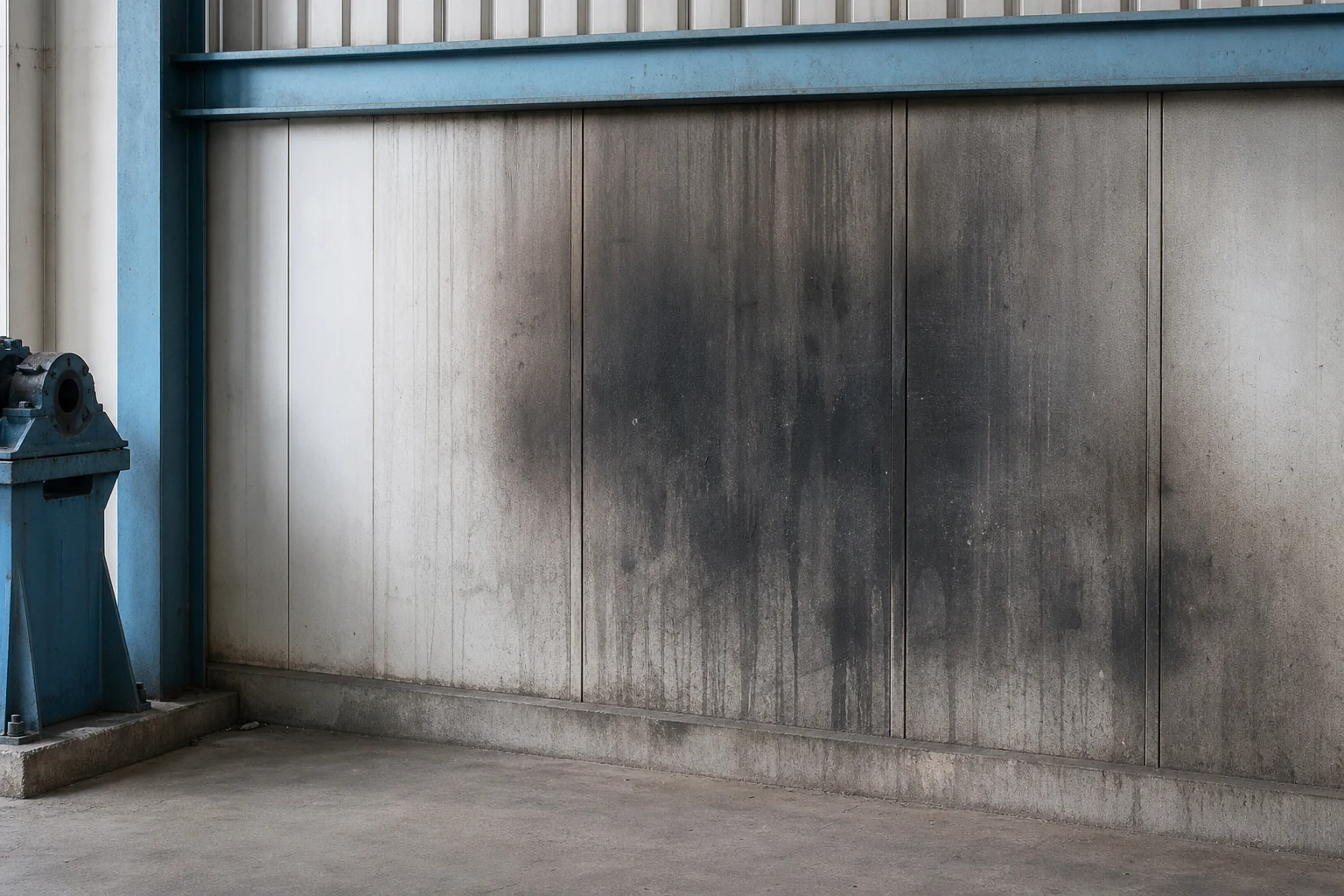
Smoke damage is complex because fire residue is not one uniform layer. Depending on the material burned, the temperature of the fire and the airflow through the building, residues may be dry and powdery, oily, acidic, sticky or deeply embedded in surface texture.
On hard surfaces, soot can cling to tiny imperfections and spread when touched. On porous materials, smoke particles and odour compounds may lodge below the surface. In plant rooms, factories and workshops, residue can also settle around fixings, cable trays, motors, guards, ducts and equipment housings where manual cleaning is awkward.
That is why professional fire restoration usually starts with assessment rather than immediate cleaning. The restorer needs to identify the substrate, the type of residue, the level of contamination and whether the surface can tolerate moisture, abrasion or chemicals. Dry ice cleaning is often considered when the priority is to lift residue from the surface while keeping the underlying material intact.
How dry ice blasting works on soot and smoke residue
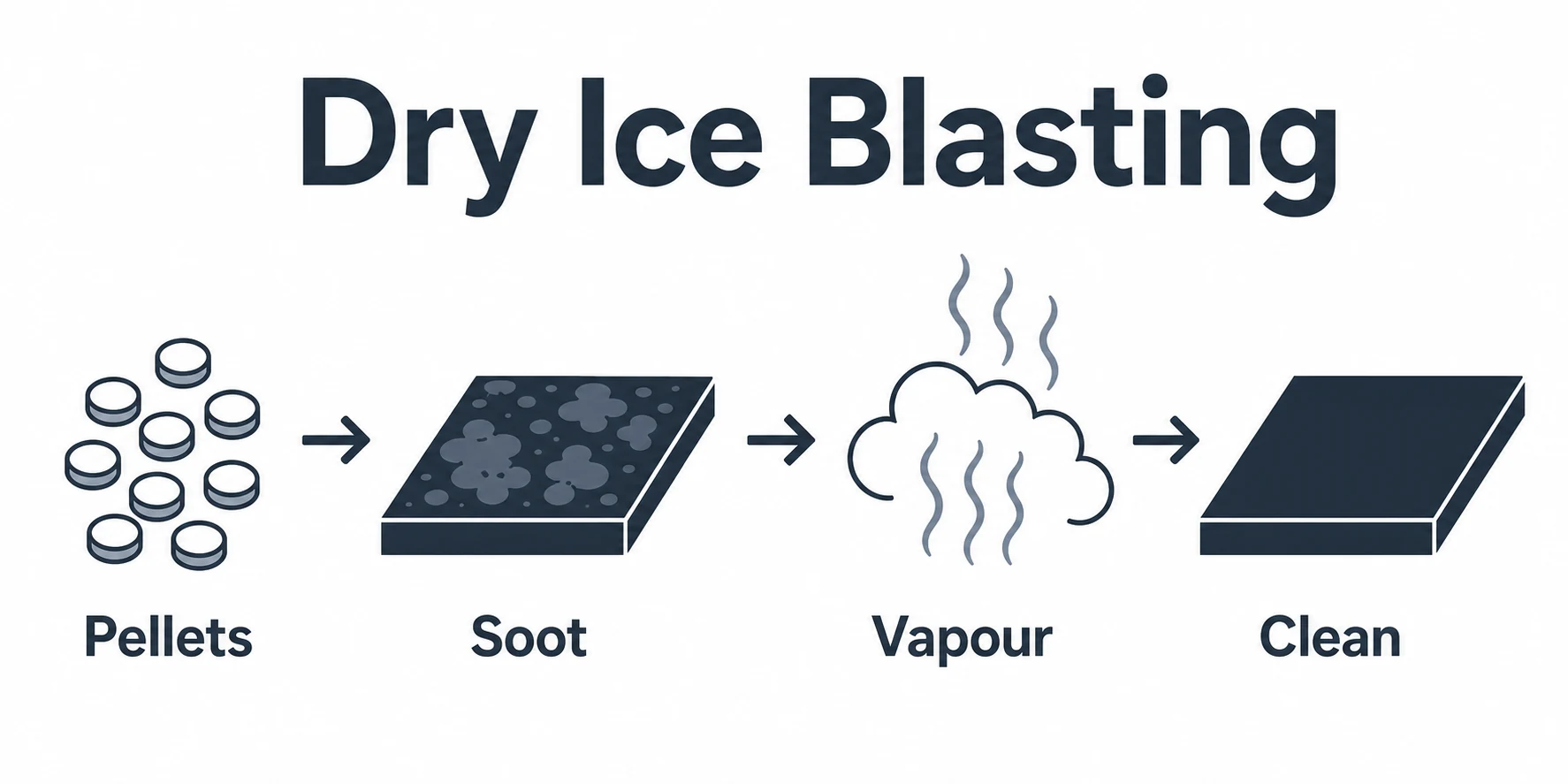
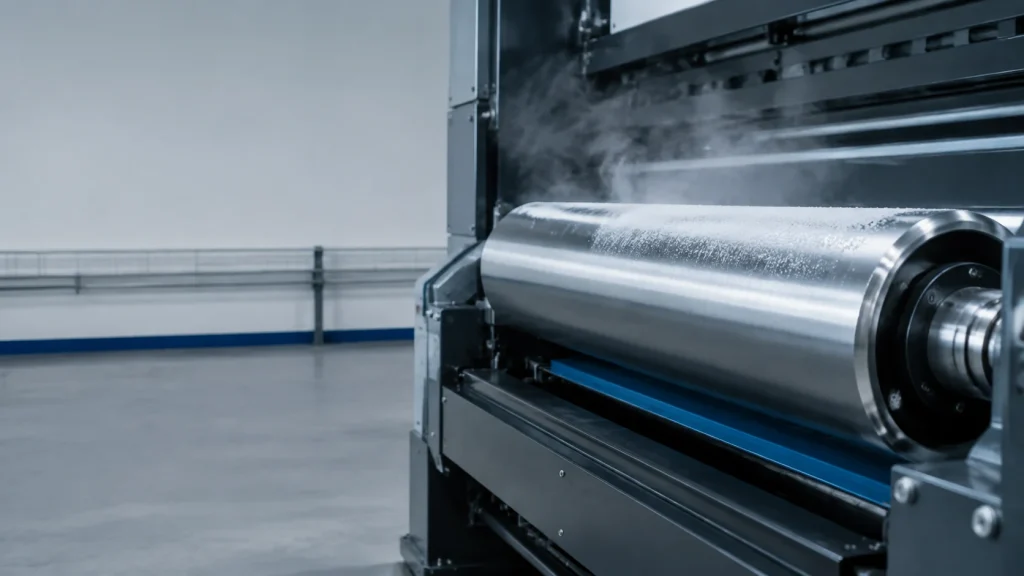
Dry ice blasting uses small pellets of solid carbon dioxide accelerated in a controlled air stream. When the pellets strike the surface, three things happen together. The impact helps loosen the contaminant. The cold temperature can make certain residues more brittle. The dry ice then changes directly from a solid into gas, helping lift loosened material away from the surface.
Because the cleaning media disappears during use, there is no spent grit or wet slurry to collect afterwards. The waste is mainly the removed soot, ash, dust and surface contamination, which can then be captured, vacuumed or contained as part of the restoration method statement.
This makes dry ice blasting very different from sand, glass, soda or water based methods. It does not rely on cutting the surface away. Properly controlled, it can remove contamination from metal, concrete, brick, stone, timber and machinery surfaces while reducing the risk of saturation or abrasive marking.
For broader information on where the method fits after a fire, Gransden Ice Blasting explains its approach to dry ice fire restoration cleaning.
Why a dry process matters after fire damage
Water is essential for fire control, but after the event it can create extra cleaning challenges. Damp materials may take longer to stabilise, and moisture can carry soot deeper into porous surfaces. Around electrical housings, machinery, motors, bearings and production equipment, additional water may also be undesirable.
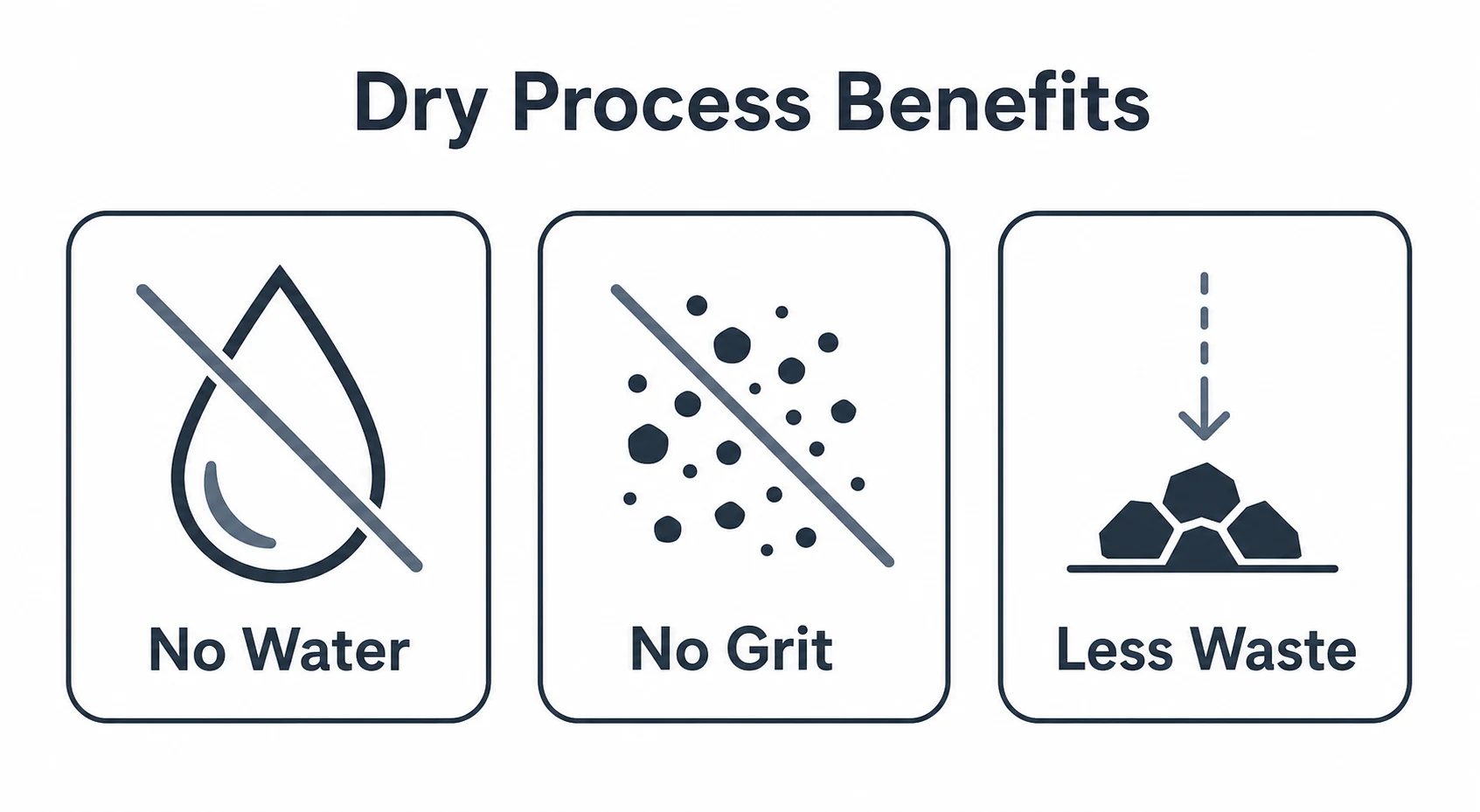
Dry ice blasting does not add free water to the surface. The pellets sublimate on contact, which means the process can be useful where drying time, moisture sensitivity or access constraints matter. It can also help restoration teams work around awkward shapes, textured surfaces and installed equipment without dismantling every component unnecessarily.
The absence of added grit is also important. Abrasive media can become trapped in machinery, joints, voids and crevices. On heritage materials or detailed internal structures, grit may create additional clean up work or alter the surface. Dry ice avoids that extra blast media, which is one reason it is also used in careful historical restoration cleaning.
Dry does not mean careless. Professional operators still need suitable containment, extraction, ventilation and personal protective equipment. The aim is controlled removal, not simply more blasting pressure.
Where dry ice cleaning can help in fire restoration
Dry ice blasting is most useful where smoke residue is attached to robust surfaces that need a thorough clean without water or abrasive media. Common examples include steelwork, concrete, brick, stone, timber beams, production lines, plant room equipment, ducting, tanks, guards, framework, tools and workshop machinery.
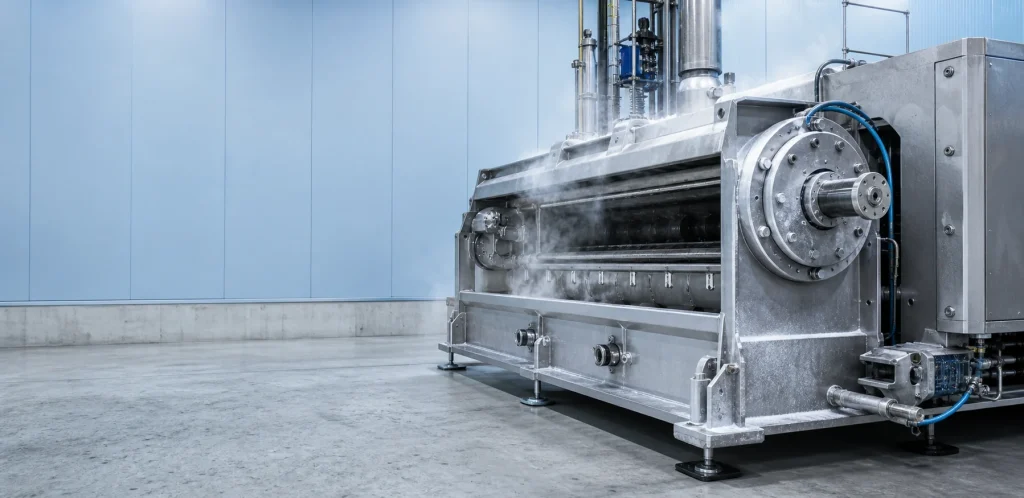
It can be particularly valuable when smoke has reached mechanical and industrial areas. Residue may settle around panels, conveyors, presses, fabrication equipment and hard to reach edges. A targeted dry ice process can clean these areas while limiting strip down where that is appropriate and safe.
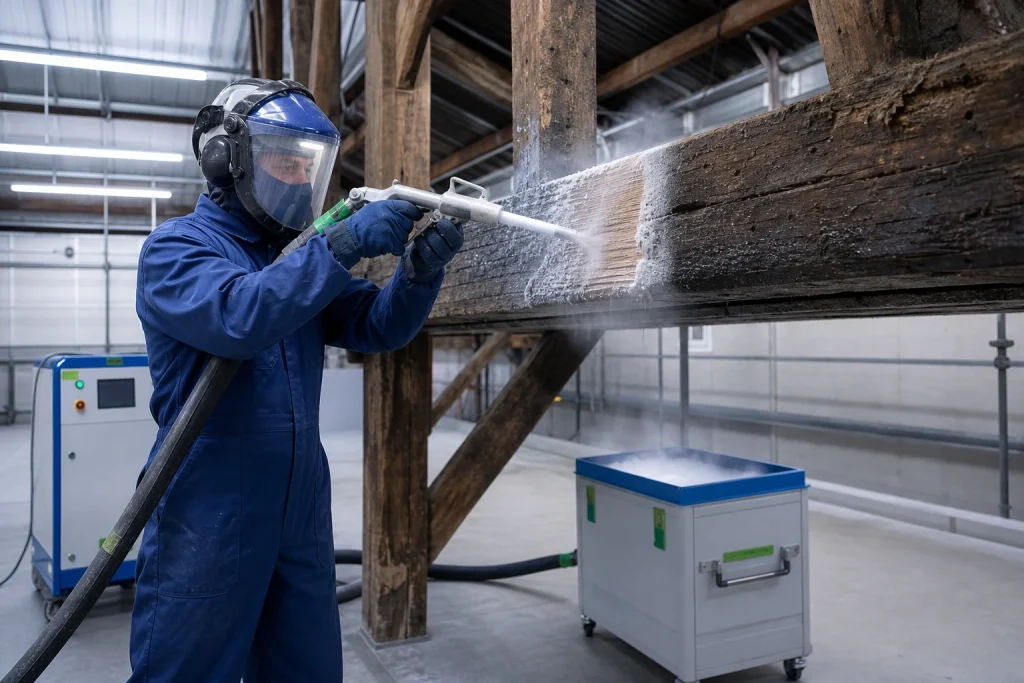
Timber needs careful judgement. Dry ice can remove soot from the surface of beams and boards while helping preserve the character of the material. Pressure, nozzle choice, pellet size and dwell time all matter. The same principle applies to older brick, stone and decorative surfaces, where a trial patch can confirm the right level of cleaning before wider work begins. For related detail, see how dry ice beam cleaning restoration is used on exposed timber.
In industrial settings, dry ice blasting can also support cleaning after a localised incident by removing smoke deposits from equipment and surrounding structures. It sits naturally alongside wider industrial dry ice cleaning where production assets need precise, practical cleaning methods.
What dry ice blasting does not replace
Dry ice blasting is a cleaning method, not a complete fire restoration plan by itself. It does not replace structural assessment, electrical checks, odour investigation, drying, disposal of damaged materials, sealing where required or reinstatement work. It is one specialist tool within a wider professional process.
Some materials may be too delicate, too unstable or too contaminated for blasting without prior preparation. Loose plaster, flaking coatings, fragile finishes, heavily charred surfaces and certain plastics may need a different approach. In other cases, dry ice blasting may remove the residue but further odour treatment may still be needed if smoke compounds have penetrated deeply.
This is why test areas are useful. A small controlled trial can show how the substrate responds, how much residue is removed and whether the finish is suitable. It also helps the contractor choose the right nozzle, air pressure, pellet format and clean up method.
The best results come from matching the method to the surface rather than forcing one process onto every part of the building or equipment. Dry ice blasting is strong because it is precise and adaptable, but it still needs professional judgement.
What to expect from a professional dry ice cleaning visit
A professional team will normally start by reviewing the affected areas, the type of residue, access, services, ventilation and safety controls. They may ask what burned, how the fire was controlled and whether any materials are known to be hazardous. That context helps shape the cleaning plan.
Before cleaning begins, sensitive items may be protected, loose debris may be removed and containment or extraction may be set up. Operators then work systematically across the affected surfaces, adjusting the blast settings to suit each material. The removed residue is managed as waste rather than left to spread into clean areas.
After blasting, surfaces are checked for remaining soot, staining and odour sources. Some areas may need repeat passes, detail cleaning or a separate treatment depending on the level of smoke penetration. The goal is to leave the surface clean enough for the next stage of restoration, whether that is inspection, reuse, coating, repair or reinstatement.
For buyers, the key question is not simply whether dry ice blasting can remove soot. It is whether it is the right method for the surface, the building use and the restoration outcome. When the answer is yes, it can be a clean, controlled and highly practical way to deal with smoke damaged surfaces.
- Dry ice blasting removes soot and smoke residues without adding water or spent grit.
- The process is non abrasive when correctly controlled, making it useful for machinery, metalwork, masonry and suitable timber.
- It can reduce secondary waste because the dry ice changes into gas during use.
- A test area helps confirm the right pressure, nozzle and cleaning approach for each surface.
- Dry ice cleaning works best as part of a professional fire restoration plan.
Frequently asked questions
Can dry ice blasting remove smoke smell?
It can help by removing soot and smoke residue from surfaces, including residue that may be contributing to odour. If odour has penetrated deeply into porous materials, additional odour treatment may also be needed.
Is dry ice blasting safe for timber after a fire?
It can be suitable for many timber surfaces when handled by experienced operators. The surface condition, level of charring and desired finish should be assessed first, usually with a controlled test area.
Does dry ice blasting leave water behind?
No. Dry ice changes from solid pellets into gas during the process, so it does not wet the surface or leave slurry behind. The main clean up is the residue removed from the surface.
When is dry ice cleaning not the right choice?
It may not suit unstable, very fragile or heavily damaged materials. A professional assessment should decide whether dry ice blasting, another cleaning method or material replacement is the better option.
Need advice on smoke damaged surfaces?
Speak to Gransden Ice Blasting about dry ice cleaning for fire affected surfaces, machinery and building materials. A practical assessment can help identify where the method will add the most value.