Old timber beams carry texture, tooling marks, age and character that are easy to lose with the wrong cleaning method.
Dry ice beam cleaning is used where careful restoration matters: removing soot, paint residues, grime and old coatings while helping protect the surface beneath.
Why old beams need a careful cleaning method
Historic and aged timber is rarely uniform. One beam may have dense heartwood, softened edges, cracks, old peg holes, worm trails, smoke staining and layers of previous finishes. Aggressive cleaning can flatten these details or leave the timber looking stripped rather than restored.
That is why beam cleaning is not simply about making wood look lighter. The aim is to remove unwanted contamination while retaining the features that give the timber its value and appearance. For many buildings, those features include adze marks, saw marks, chamfered edges, natural grain and the darker tone held in deeper crevices.
Dry ice beam cleaning and restoration is well suited to this kind of work because it can be controlled at the nozzle. Operators can adjust technique according to the timber condition, the coating being removed and the finish required.
How dry ice beam cleaning works
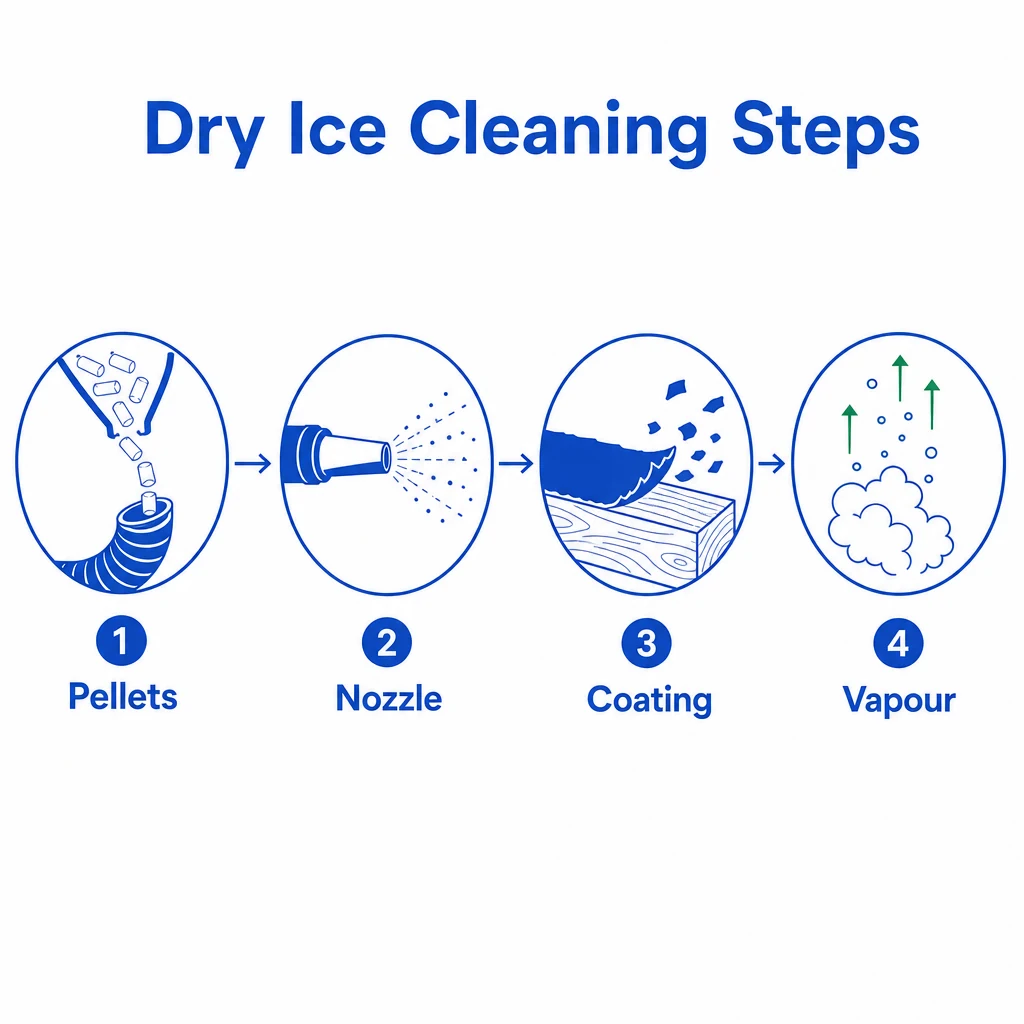
Dry ice blasting uses solid carbon dioxide pellets propelled through a hose and nozzle by compressed air. When the pellets hit the surface, they create a cleaning effect through impact, rapid cooling and sublimation. Sublimation means the dry ice changes from solid to gas, leaving no melted water and no spent grit behind.
On timber beams, the process can help break the bond between the surface and unwanted material such as soot, dust, loose paint, old residue or general built-up grime. The cold effect can make some coatings more brittle, while the impact helps lift them away.
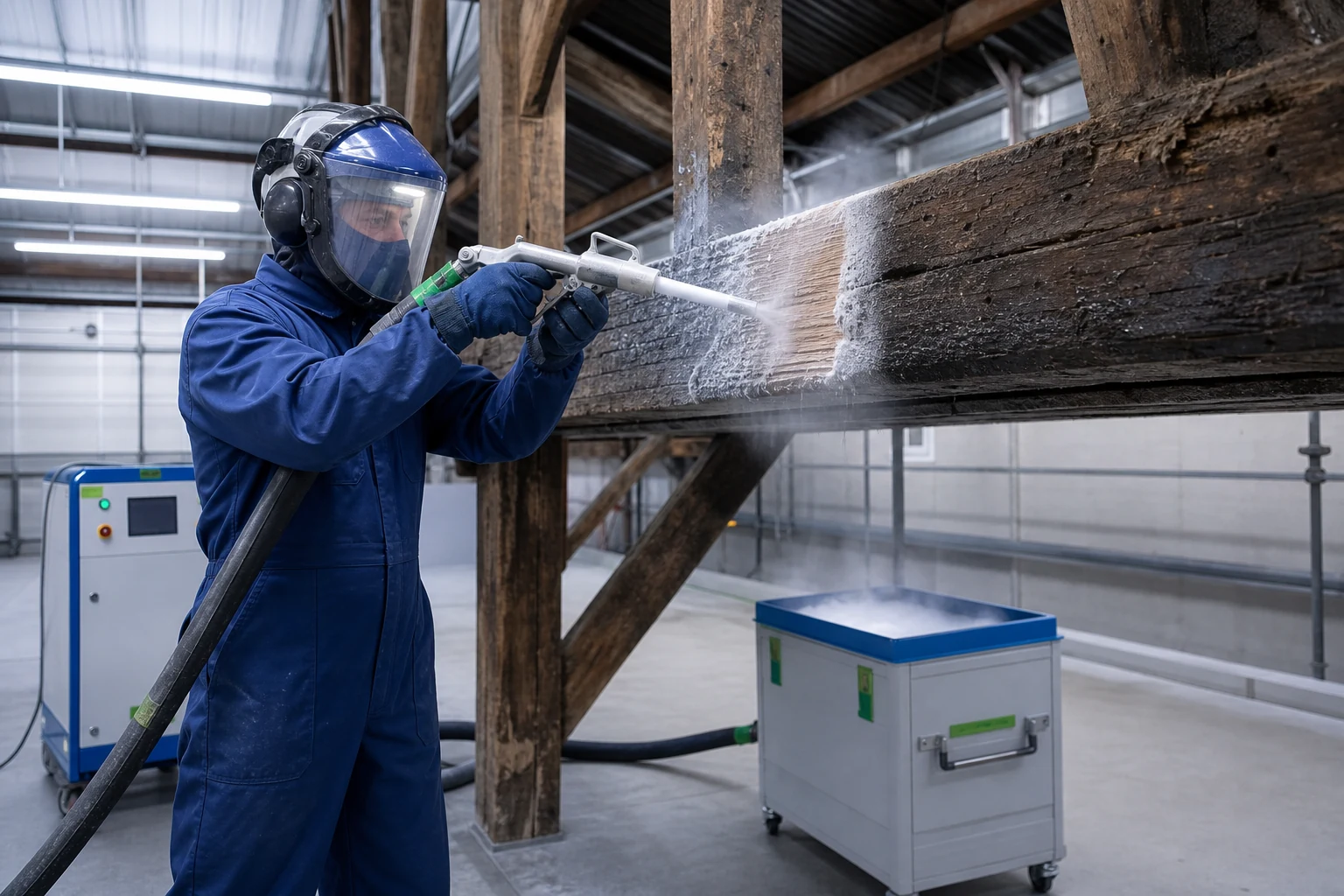
In practice, this is a highly visual, hands-on process. A professional operator works with blasting hoses, nozzles and dry ice containers, often with visible cold vapour around the area being cleaned. Practical PPE such as coveralls, gloves, face and eye protection and ear defenders is part of normal site working.
The key advantage is control. The operator can alter distance, angle, dwell time and air pressure to suit the beam. A broad, lighter pass may be used to lift surface dirt, while more focused work may be needed where residues sit in cracks or around fixings.
Reducing abrasion while preserving detail
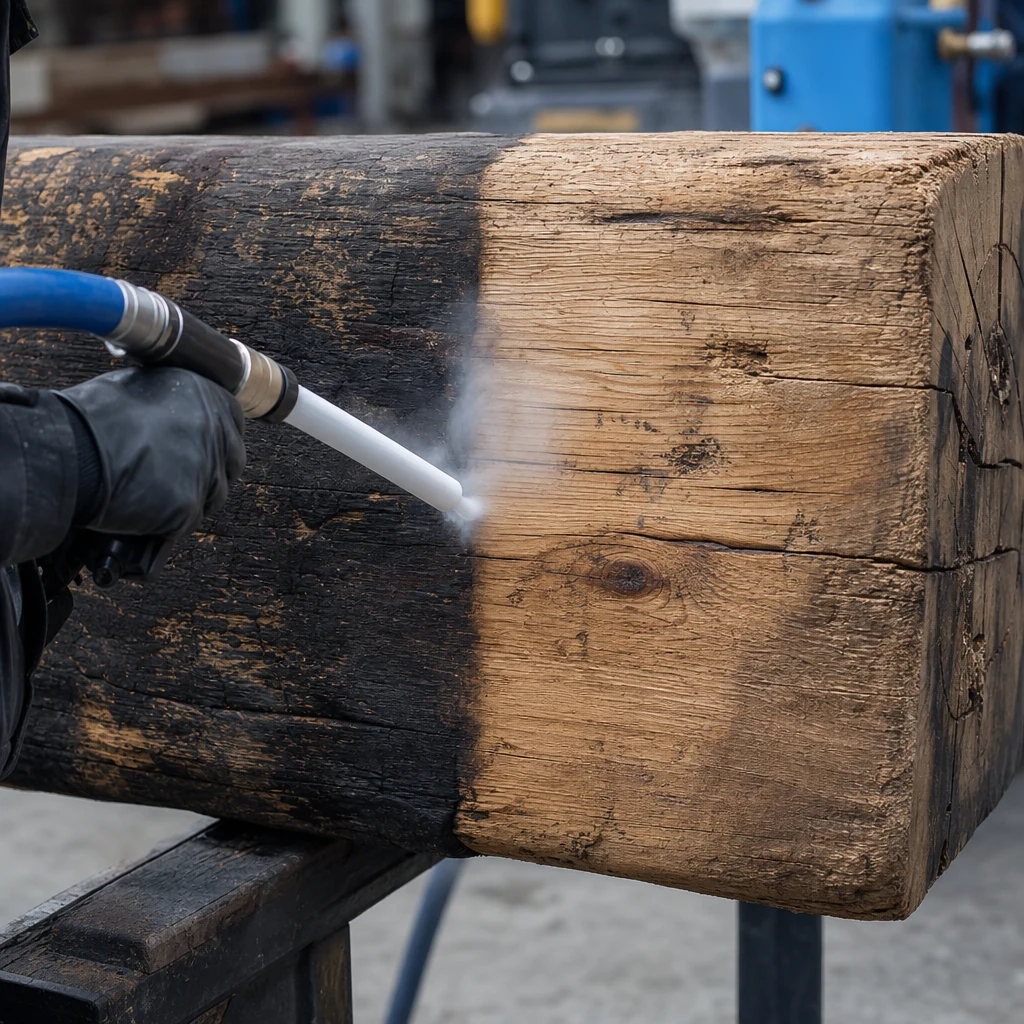
Traditional abrasive methods can remove contamination, but they may also remove more of the timber surface than intended. On old beams, that can mean softened profiles, opened grain, rounded edges or a uniformly scoured appearance.
Dry ice cleaning is often chosen because it is a low-residue, carefully controllable process. It does not rely on a hard mineral grit remaining on the surface. The pellets disappear as gas, so the operator is not blasting the timber with sand, glass or another solid material that must then be cleared from joints and cracks.
This does not mean every beam can be cleaned in exactly the same way. Timber condition matters. Very friable, rotten or badly delaminated wood may need a lighter approach or further assessment before cleaning. A test area is valuable because it shows how the beam, coating and desired finish interact.
Used correctly, dry ice beam cleaning can help protect surface detail by targeting the contamination rather than unnecessarily cutting into the timber. That is particularly important where beams have historic tool marks, original edges or decorative shaping that should remain visible after cleaning.
No water, no grit and less secondary mess
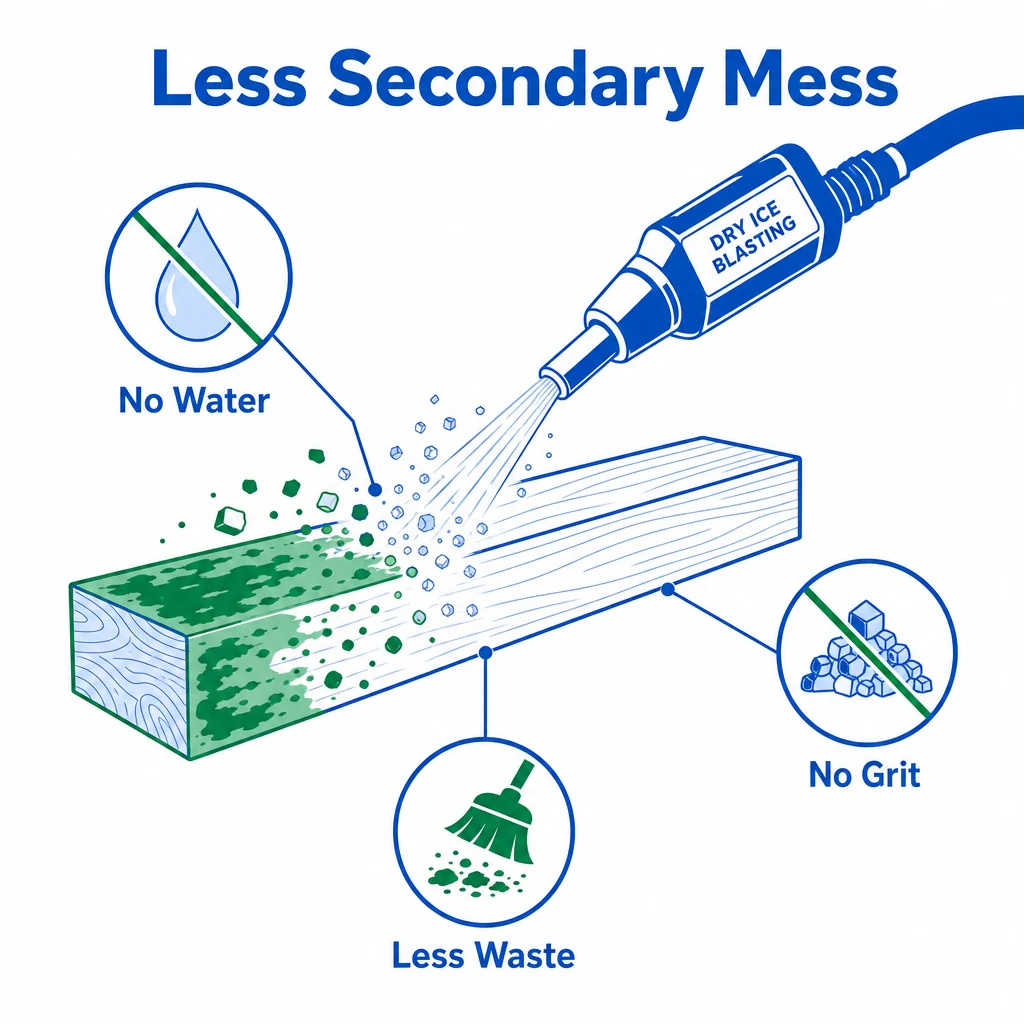
Residue is one of the common concerns in beam restoration. Many beams sit above finished floors, wall finishes, electrical fittings, plant, stored items or sensitive interiors. Introducing water or large volumes of loose abrasive can complicate the job and increase the amount of protection and clean-up required.
Dry ice sublimates on impact, so it does not leave wet slurry and it does not create a pile of spent blasting media. The removed contamination still has to be managed, collected and cleaned from the work area, but the cleaning medium itself disappears.
This is useful for timber because excess moisture can raise grain, carry staining, prolong drying times or affect nearby materials. Dry ice blasting avoids adding liquid water to the beam, which is one reason it is considered for older interiors and restoration settings.
The same residue advantage is why dry ice blasting is used in other technical environments. For example, Gransden also applies controlled dry ice cleaning for automotive dry ice cleaning and aviation cleaning applications, where controlled cleaning and reduced secondary waste are important.
What dry ice can remove from beams
The suitability of dry ice cleaning depends on the beam, the coating and the result required. It is commonly considered for removing or reducing:
- Soot and smoke staining from exposed timber
- Dust, cobwebs and ingrained surface grime
- Loose or flaking paint and coatings
- Some residues from previous finishes
- Contamination in cracks, joints and textured grain
It may not remove every coating in a single pass, and not all historic finishes should automatically be stripped away. In some cases, the right outcome is a sympathetic clean rather than a complete return to bare wood. This is why a clear brief is important before work begins.
Useful questions include: should the beams look lighter, or simply cleaner? Are tooling marks to be highlighted? Are darker tones in cracks part of the desired character? Is there any coating that needs specialist assessment before removal?
A professional cleaning plan should consider access, containment, ventilation, nearby surfaces and the condition of the timber. This helps the work remain controlled and supports a finish that suits the building rather than a generic, over-cleaned look.
What to expect from a professional beam cleaning process
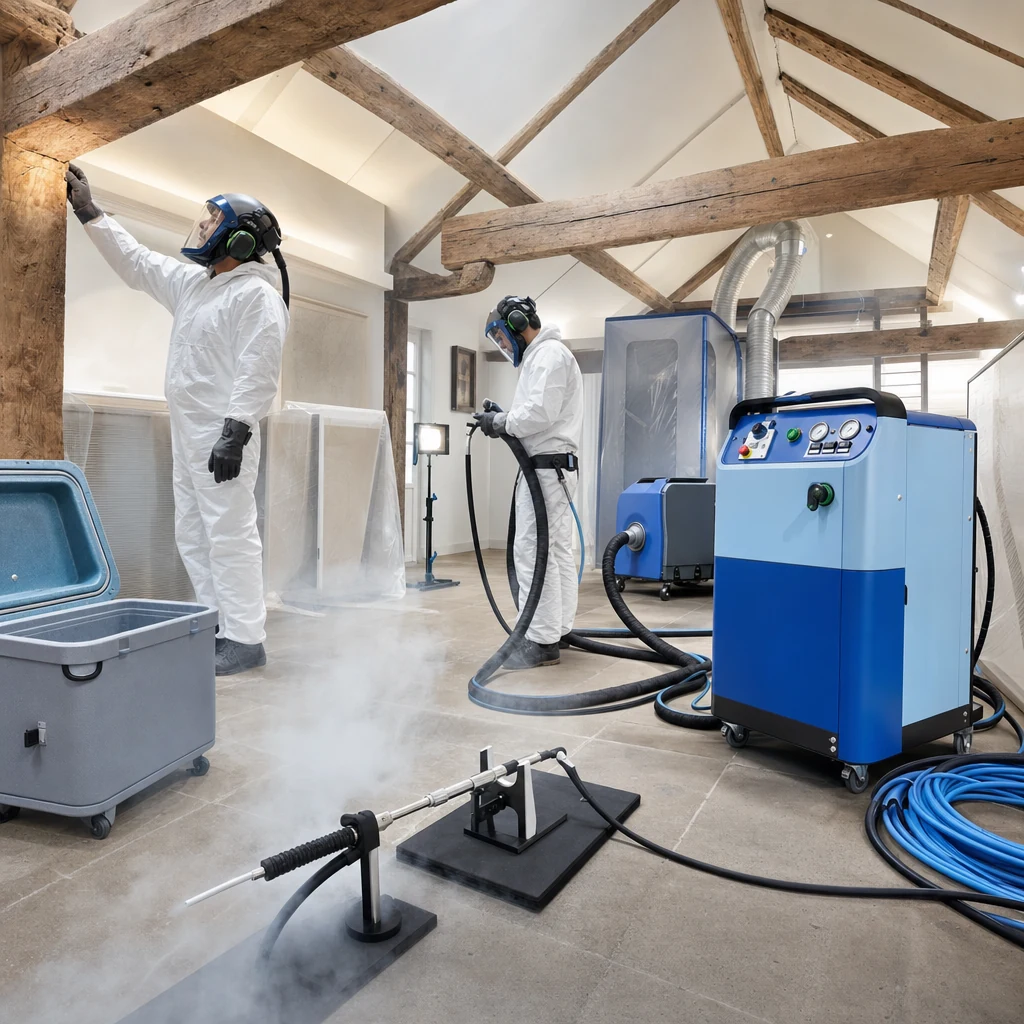
A good dry ice beam cleaning project starts with inspection. The operator will look at the timber condition, coating type, access, surrounding materials and any sensitive details. Where appropriate, a small test patch can confirm the likely finish before wider cleaning begins.
Preparation is also important. Areas below and around the beams may be sheeted or protected. Ventilation and safe working access need to be considered. Operators use suitable PPE and manage the equipment carefully, including dry ice containers, hoses, nozzles and compressed air supply.
During cleaning, the operator works methodically along the beam, adjusting technique as the surface changes. The process can reveal grain, edges and marks that were hidden beneath soot or grime. Removed contamination is then cleared from the protected area, leaving the beam ready for any agreed next stage, such as inspection, finishing or decoration.
The best results come from matching the cleaning intensity to the timber. Dry ice blasting is a technical process, not a one-setting treatment. When handled properly, it offers a crisp, controlled way to clean old beams while respecting the surface that makes them worth preserving.
- Dry ice beam cleaning helps remove grime, soot and residues while preserving timber detail.
- The dry ice sublimates, so it leaves no wet slurry or spent grit behind.
- Control at the nozzle allows the operator to adapt to the beam condition and desired finish.
- A test area is useful where coatings, timber age or surface condition are uncertain.
- The aim is sympathetic restoration, not unnecessary stripping of character.
Frequently asked questions
Will dry ice cleaning damage old timber beams?
When assessed and carried out correctly, dry ice cleaning is designed to be controlled and sympathetic. The operator adjusts the method to the timber condition, coating and finish required. Fragile or decayed areas should always be checked first.
Does dry ice beam cleaning leave residue?
The dry ice itself turns to gas on impact, so it does not leave spent grit or wet slurry. The material removed from the beam still needs to be collected and cleaned from the work area.
Can it remove paint from beams?
It can remove or reduce many loose, flaking or brittle coatings, but results depend on the paint type, thickness, adhesion and timber condition. A test patch is the best way to confirm the likely result.
Is dry ice cleaning suitable for restoration projects?
Yes, it is often chosen where preserving grain, tooling marks and surface character matters. It is especially useful when water, grit or heavy abrasion would be undesirable.
Talk to Gransden Ice Blasting
If you are planning timber beam restoration, Gransden Ice Blasting can advise on a careful dry ice cleaning approach.