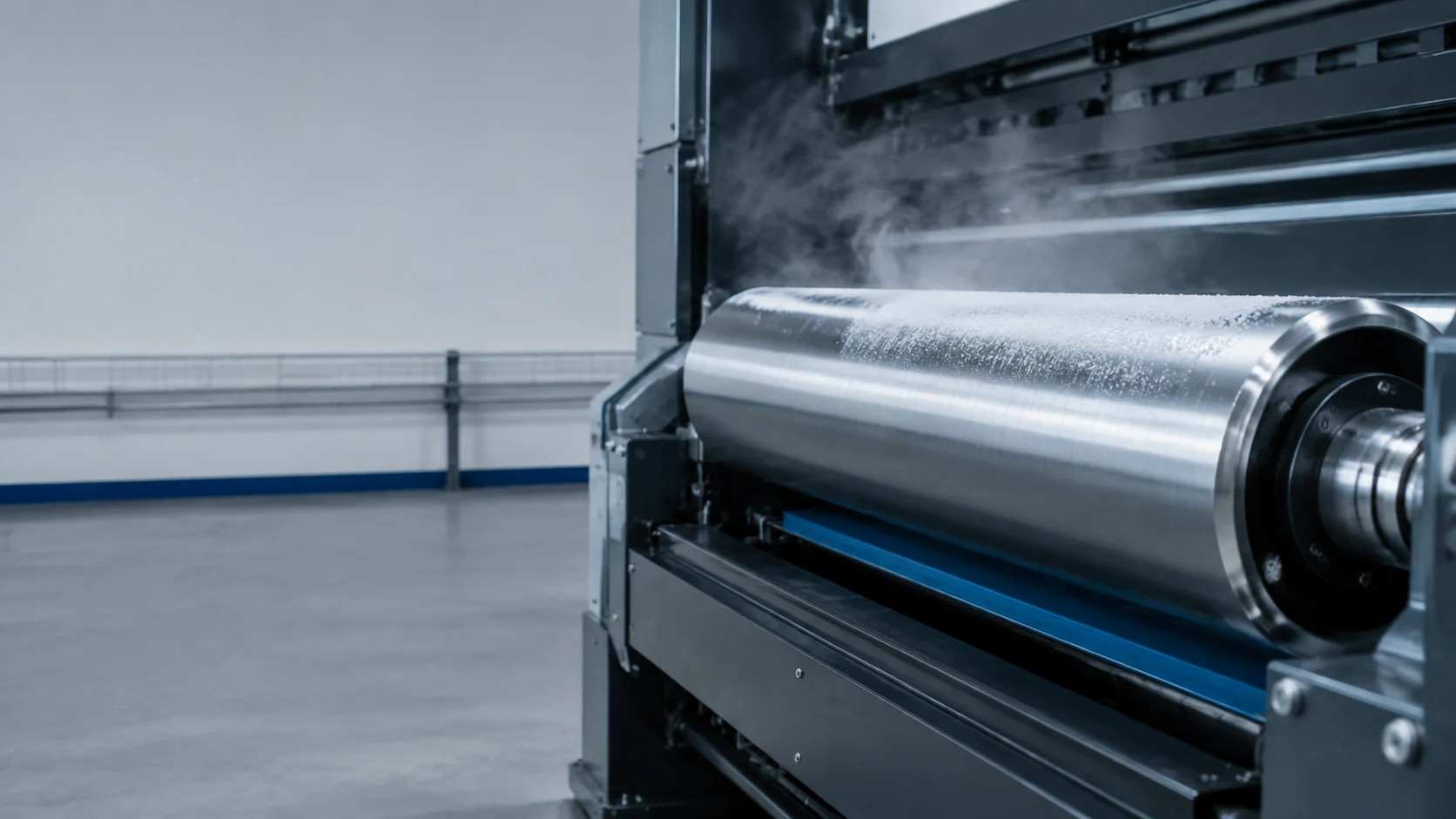
Ink build up on press rollers is more than a housekeeping issue. As layers of ink, coating, adhesive residue, paper dust and general production grime collect on roller surfaces, the press can become harder to control and clean print quality can become more difficult to maintain.
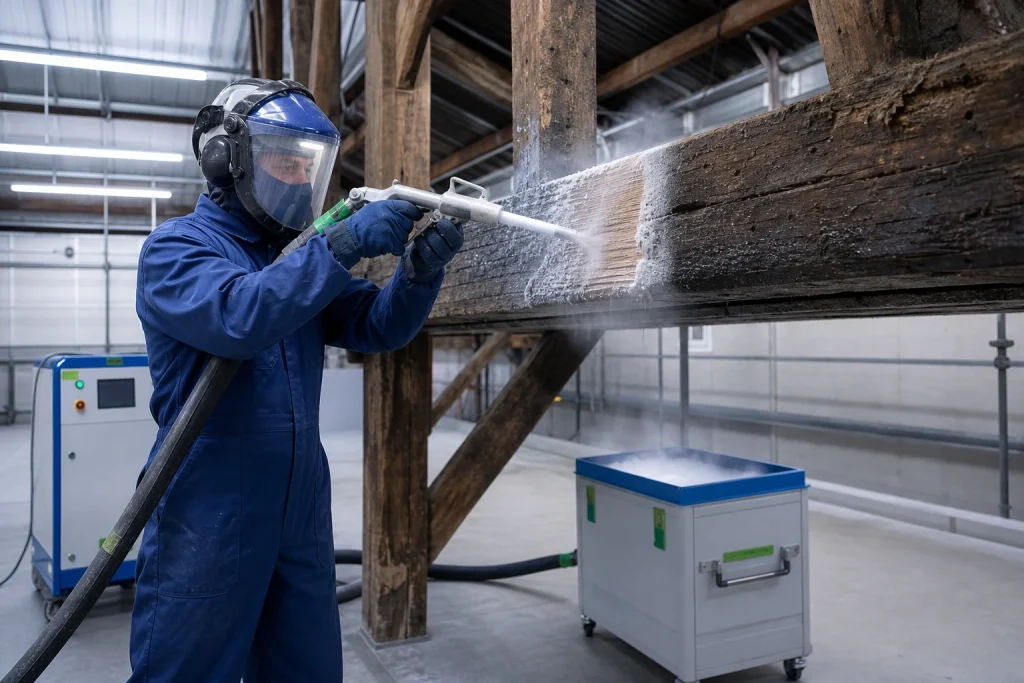
Dry ice blasting gives print and paper operators a precise way to tackle stubborn deposits on suitable equipment. It uses solid carbon dioxide pellets propelled in a controlled air stream, helping remove contamination without adding water, grit or chemical residue to the surrounding process.
Why ink build up becomes a problem on press rollers
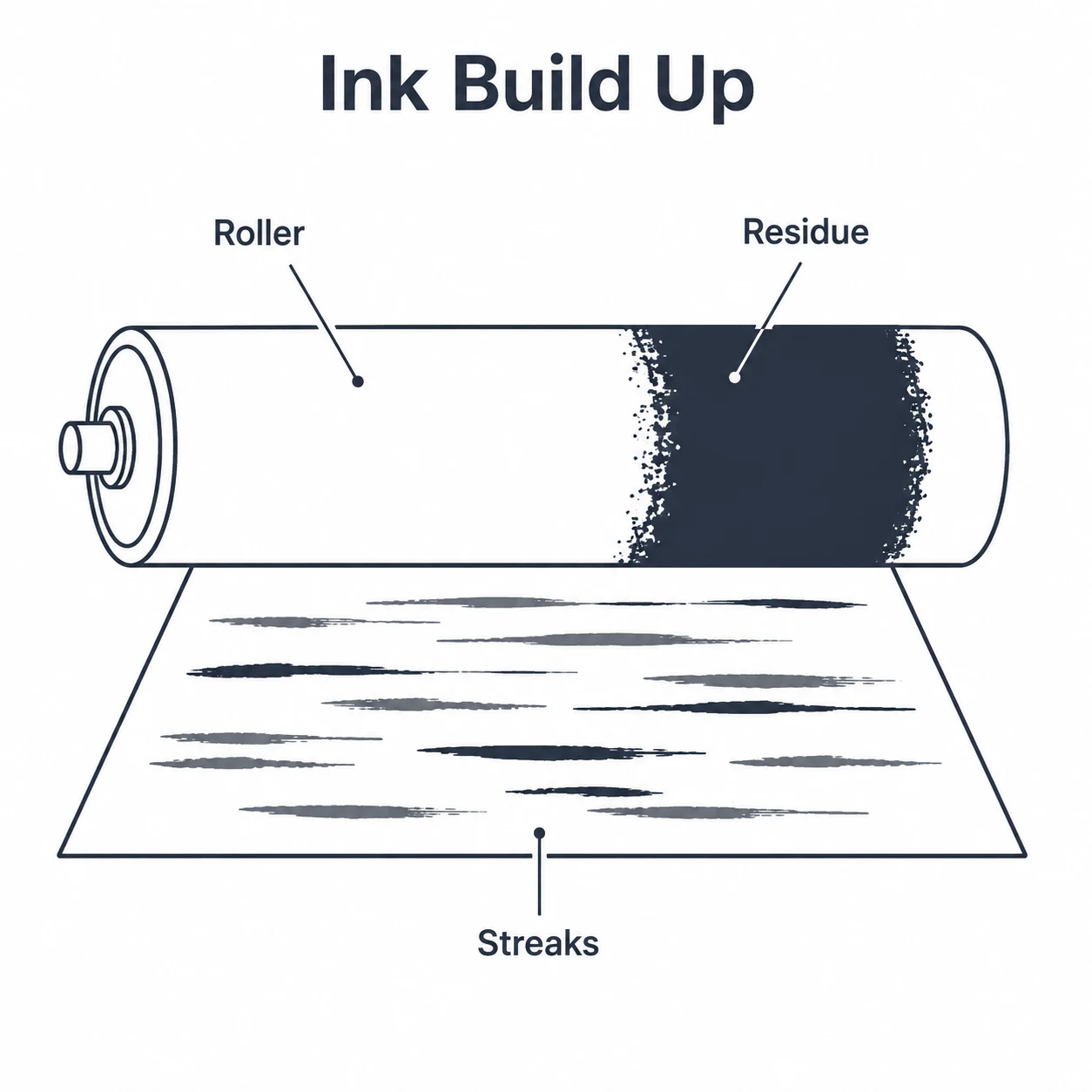
Press rollers work in demanding conditions. They are exposed to ink, solvents, coatings, paper fibres, heat, pressure and repeated contact. Over time, residues can form a layered deposit that is harder to remove with routine wiping or manual cleaning.
This build up may appear around roller ends, grooves, journals, guards, frames and nearby components as well as on the rollers themselves. Once residue has dried, cured or compacted, it can cling tightly to metal, rubber, composite and painted surfaces. The exact cleaning method depends on the roller type, condition and manufacturer guidance.
When deposits are left too long, cleaning can become more disruptive because teams may need to spend extra time softening, scraping or dismantling affected parts. A controlled dry ice cleaning process can help target the contamination more directly, especially where water, abrasive media or heavy chemical use would create extra clean up work.
How dry ice blasting removes ink and residue
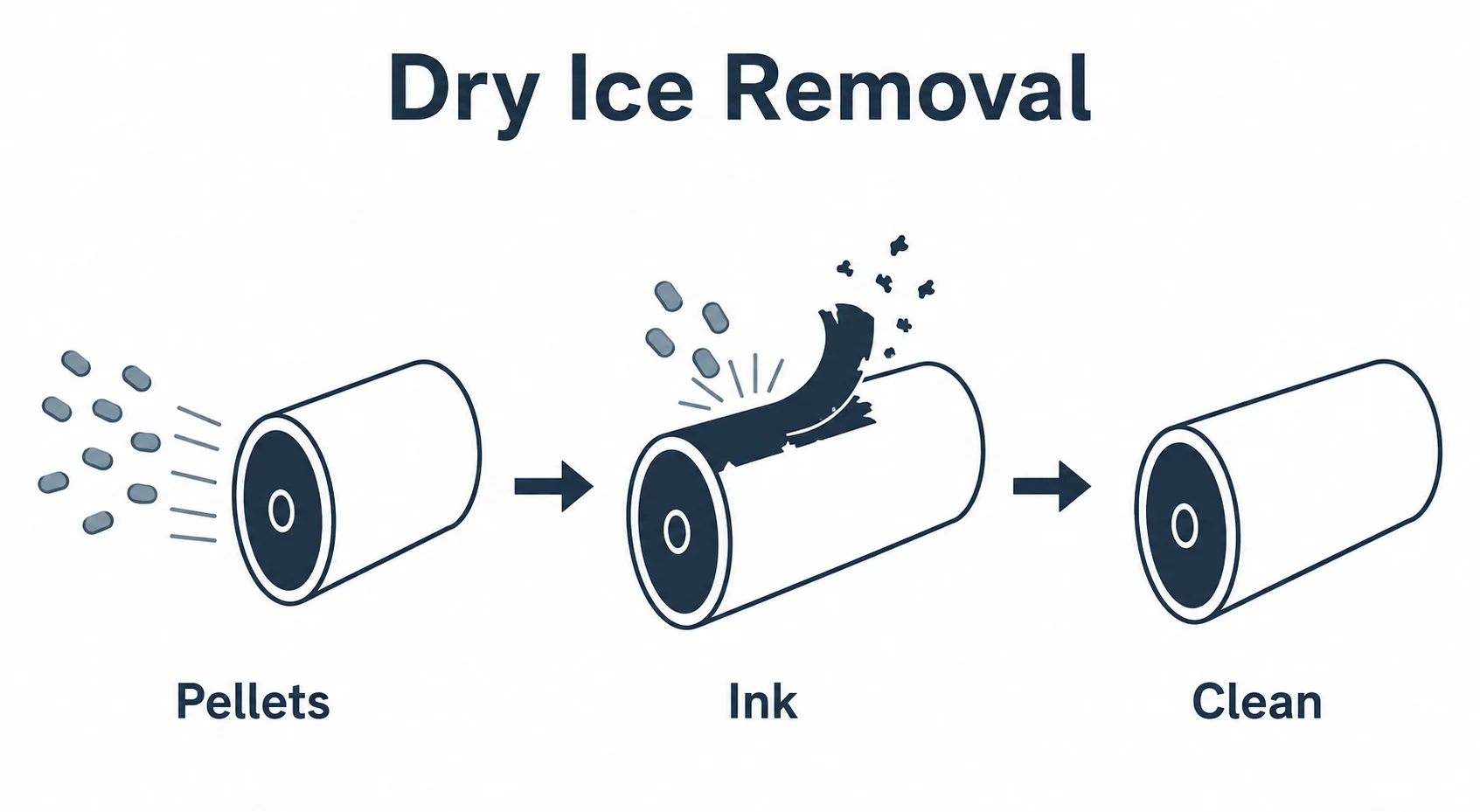
Dry ice blasting works by accelerating dry ice pellets through a specialist nozzle using compressed air. When the pellets reach the contaminated surface, they help loosen the bond between the residue and the substrate. The dry ice then changes from solid to gas, so it does not leave a secondary blasting medium behind.
For ink build up, the cleaning effect comes from a combination of impact, rapid cooling and expansion as the dry ice sublimates. The process can make brittle deposits easier to release, while the operator controls air pressure, pellet flow, nozzle choice and working distance according to the surface being cleaned.
This is one reason dry ice blasting is often considered for printing environments. It can reach into complex shapes, around frames and into awkward areas where manual tools may struggle. It is not a magic pass over every surface, and the correct settings matter, but in skilled hands it can remove stubborn residue while keeping the cleaning process dry.
For equipment within the print and paper sector, Gransden Ice Blasting supports printing paper industry cleaning where dry ice cleaning is suitable for the task and the equipment involved.
Why a dry process matters around printing equipment
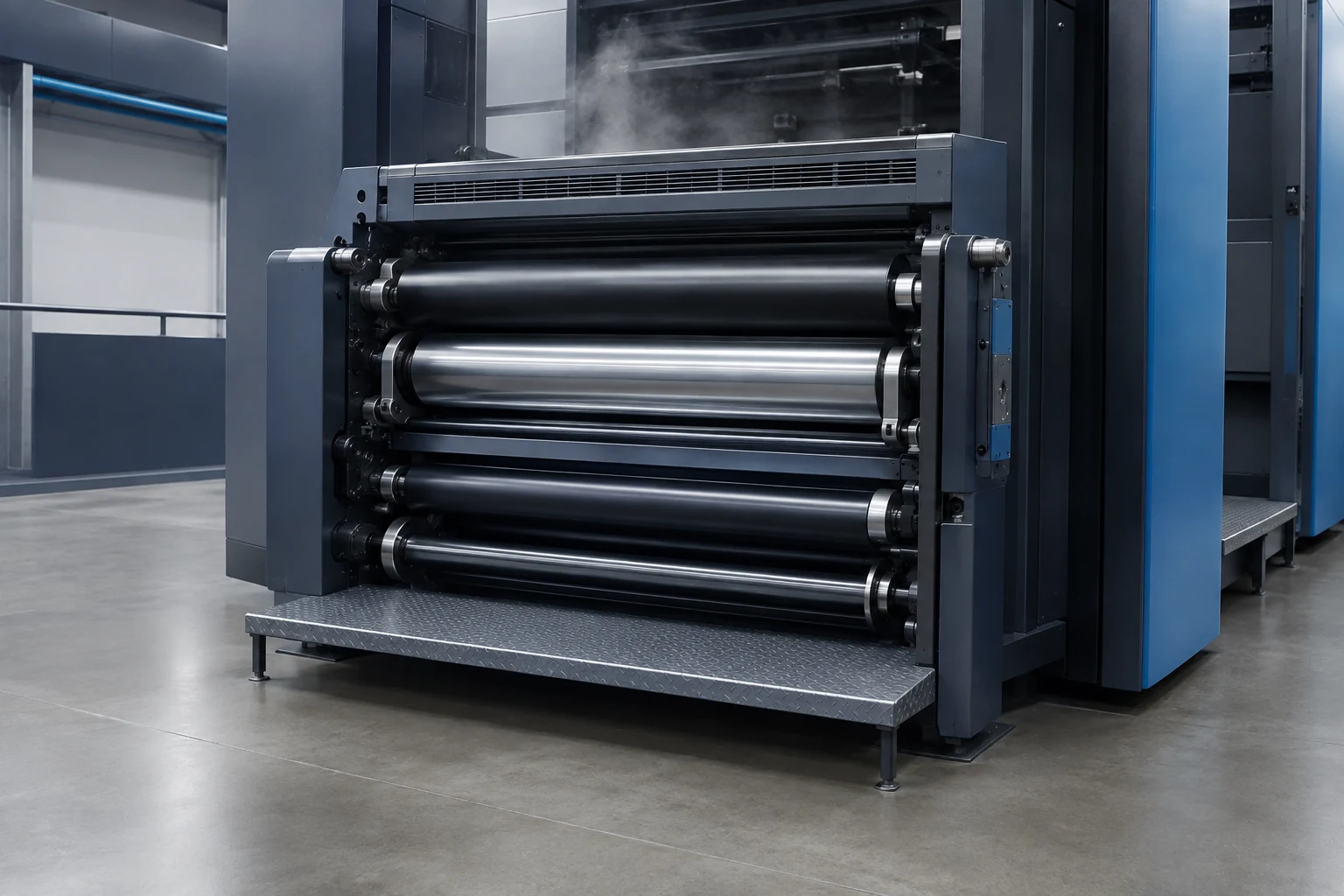
Printing equipment often contains bearings, electrical components, control panels, sensors, motors and areas where trapped moisture would be unwelcome. A cleaning method that does not introduce liquid water can be useful when planning work around sensitive assemblies.
Dry ice blasting also avoids leaving sand, grit, glass bead or other abrasive media inside guards, trays and machine cavities. That matters because secondary waste can create its own cleaning burden. With dry ice, the main waste is the removed contamination itself, which can be collected, contained and disposed of in line with site procedures.
The process can also reduce the need for aggressive scraping on suitable surfaces. Manual scraping has its place, but it can be inconsistent and may risk marking surfaces if the wrong tools are used. A controlled blasting pattern allows trained operators to work methodically across deposits, edges and recesses.
Because every press is different, the practical approach should be assessed before cleaning begins. The operator needs to understand what the deposit is, what the underlying surface is, which components should be protected and what level of access is available.
Where dry ice cleaning can help on and around presses
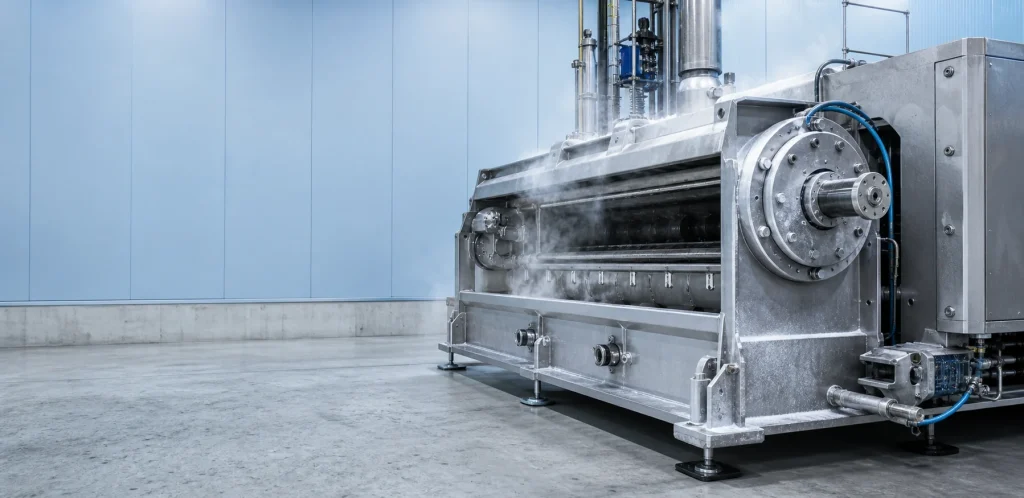
The subject often starts with press rollers, but ink and residue rarely stay neatly in one place. Dry ice cleaning may also be useful around machine frames, guards, ink trays, coating areas, feed and delivery sections, extraction points and associated production equipment.
Typical deposits can include dried ink, overspray, adhesive residue, paper dust, grease, oil film and compacted dirt. Some contaminants release quickly, while others need careful passes and adjustment of blasting settings. The value is in matching the method to the condition of the equipment rather than treating every part the same way.
Dry ice blasting may be considered during planned shutdowns, maintenance windows, deep cleans, refurbishment work or after a specific production issue has highlighted contamination. It can support a cleaner working environment and help maintenance teams see the true condition of components that were previously hidden beneath residue.
Where presses form part of a wider production facility, dry ice blasting can also sit alongside broader industrial cleaning work, particularly where dry, controlled removal of built up contamination is preferred.
What to check before cleaning press rollers
A good dry ice blasting job starts with assessment, not guesswork. Before cleaning press rollers, the team should identify the roller material, age, surface condition and any known manufacturer restrictions. Rubber covered rollers, textured surfaces and precision components need particular care.
Access is another important factor. Guards may need to be opened or removed by authorised personnel, and isolated equipment should be made safe before cleaning begins. Nearby electrical items, bearings, seals and delicate parts may need shielding depending on the task.
The type of ink and residue also affects the approach. Fresh deposits, dried layers, cured coatings and mixed contamination can behave differently under blasting. A small test area is often useful because it shows how the residue responds and helps confirm suitable settings before a larger clean continues.
Ventilation and housekeeping should also be planned. Dry ice produces carbon dioxide gas as it sublimates, so the working area must be managed properly. Removed ink and residue still need to be collected and handled according to site procedures.
Why operator skill makes the difference
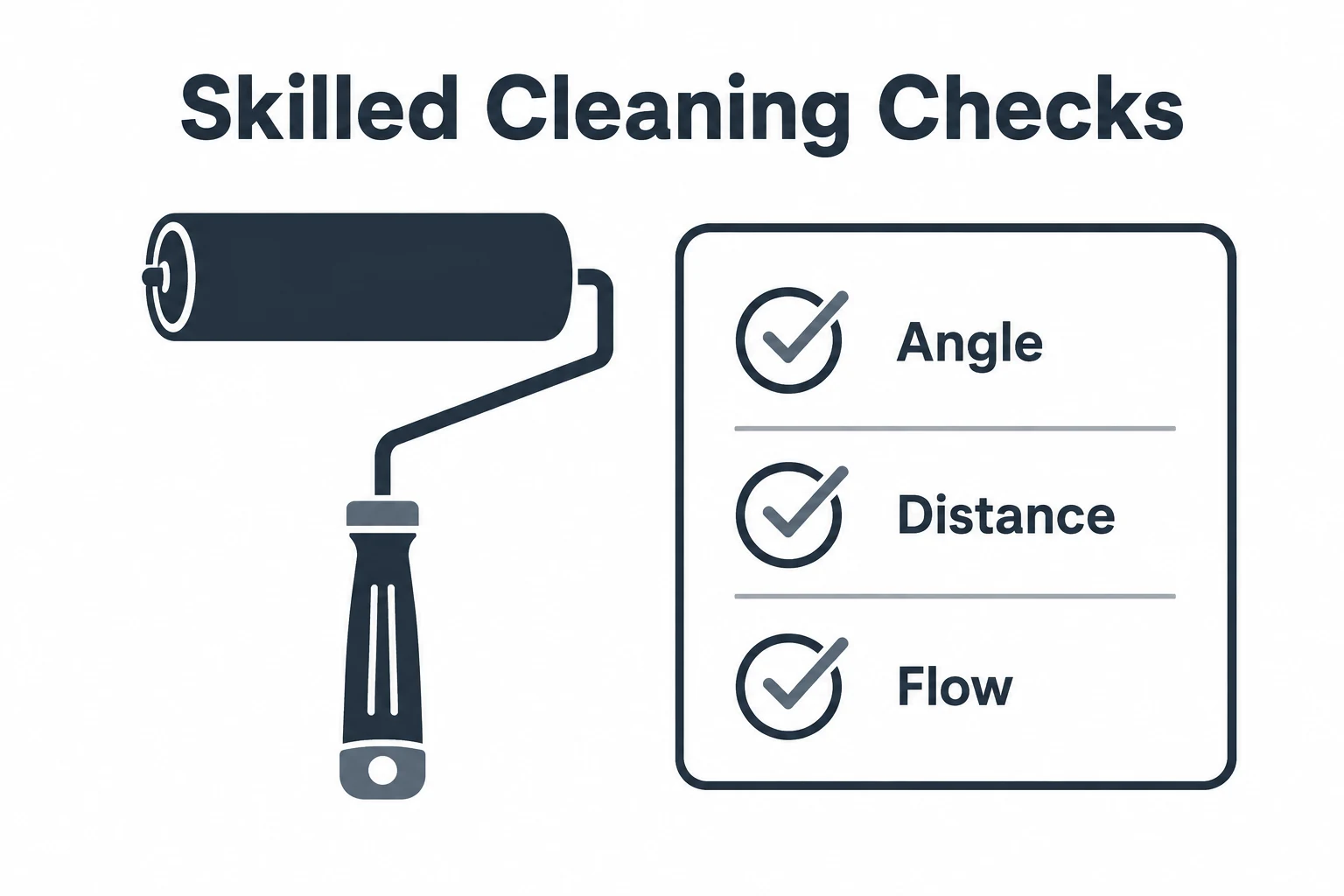
Dry ice blasting is a technical cleaning method. The equipment matters, but the operator matters just as much. Pressure, pellet size, flow rate, nozzle angle, distance and dwell time all affect the result.
Too little energy may leave stubborn ink behind. Too much energy, or the wrong technique, may be unsuitable for delicate surfaces. A professional operator works progressively, checking the response of the deposit and the condition of the surface as the job moves forward.
This is especially important around printing equipment because many parts are designed for accuracy and repeatable movement. The goal is not simply to blast hard. The goal is to remove contamination in a controlled way while respecting the machinery.
For print environments, the best outcomes usually come from clear preparation. Maintenance teams know the press, production teams know the contamination history and the dry ice cleaning team understands the cleaning process. When those details come together, the clean can be planned around the equipment rather than forced into a generic method.
- Dry ice blasting can help remove ink build up, paper dust, coating residue and production grime from suitable press components.
- The process is dry and leaves no grit or blasting media behind, which is useful around complex printing equipment.
- Correct assessment is essential, especially for roller materials, seals, bearings, sensors and precision surfaces.
- Operator technique matters because pressure, nozzle choice and working distance all affect the cleaning result.
- Dry ice cleaning is best used as a controlled maintenance support method, not as a one size fits all shortcut.
Frequently asked questions
Can dry ice blasting be used directly on every press roller?
No. Suitability depends on the roller material, surface condition, coating, age and manufacturer guidance. A professional assessment or test area helps confirm whether dry ice blasting is appropriate.
Does dry ice cleaning leave residue on printing equipment?
The dry ice itself changes into gas, so it does not leave blasting media behind. The removed ink, dust and residue still need to be collected and disposed of through normal site procedures.
Is dry ice blasting only for ink build up?
No. It can also help remove certain coatings, adhesive residue, grease, paper dust and general production grime from suitable surfaces around print and paper equipment.
When is the best time to clean press equipment with dry ice?
It is usually planned around maintenance windows, shutdowns, refurbishment work or deep cleaning schedules. Planning helps ensure safe access, isolation and protection of sensitive components.
Speak to Gransden Ice Blasting
If ink build up or residue is making press cleaning more difficult, Gransden Ice Blasting can advise whether dry ice cleaning is suitable for your equipment and maintenance plans.