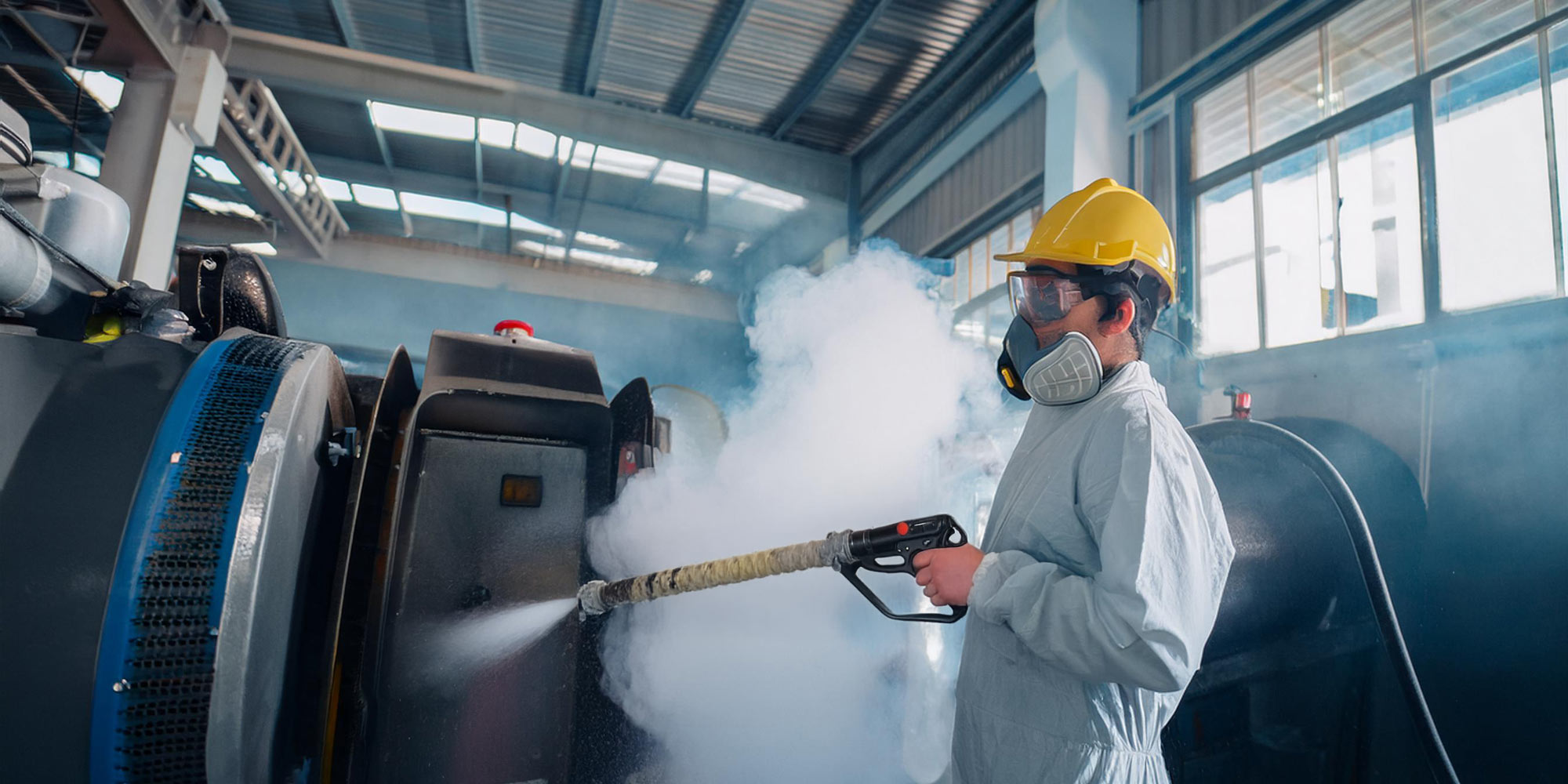
Dry ice blasting has become a widely used cleaning method across a range of industries, from manufacturing and food production through to restoration work.
It is often chosen because it can clean surfaces effectively without the need for harsh chemicals or excessive water. That alone tends to make it appealing, particularly in environments where cleanliness and minimal disruption are important.
At the same time, there is growing awareness around environmental impact, and one question comes up quite often: what actually happens to the CO₂ used in the process?
It is a fair concern, especially given the wider conversation around emissions. While it might initially sound complicated, the reality of what happens to the carbon dioxide during dry ice blasting is relatively straightforward once broken down.
What Is Dry Ice and How Is It Used in Blasting?
Dry ice is simply the solid form of carbon dioxide. It is created by compressing and cooling CO₂ gas until it forms into a solid, which is then typically shaped into small pellets for use in blasting equipment.
Unlike traditional ice, it does not melt into a liquid, which plays a key role in how the cleaning process works.
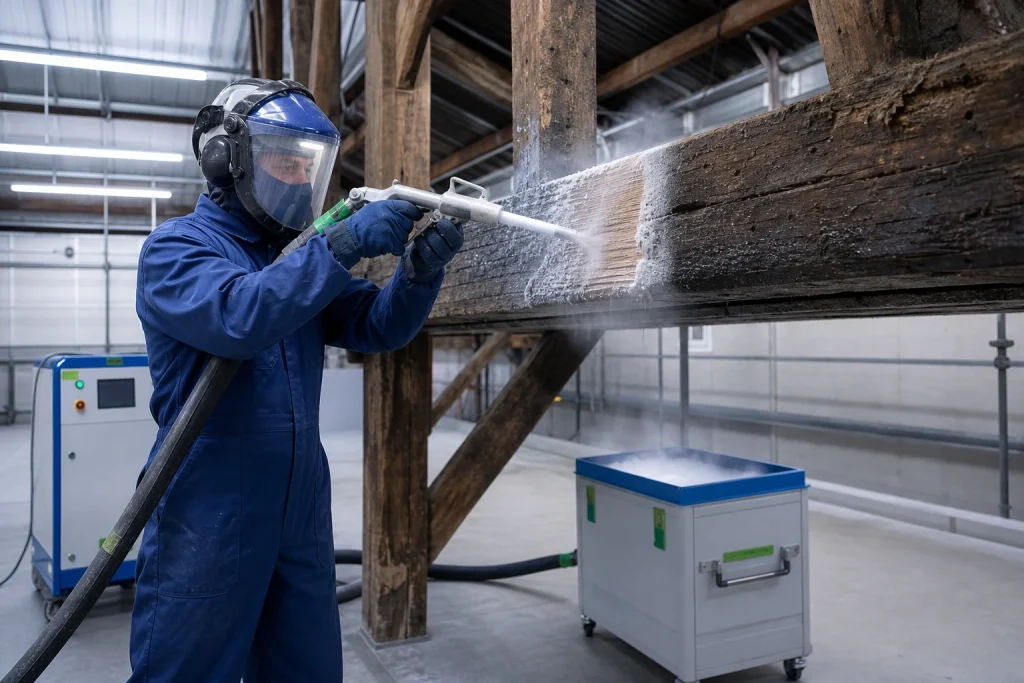
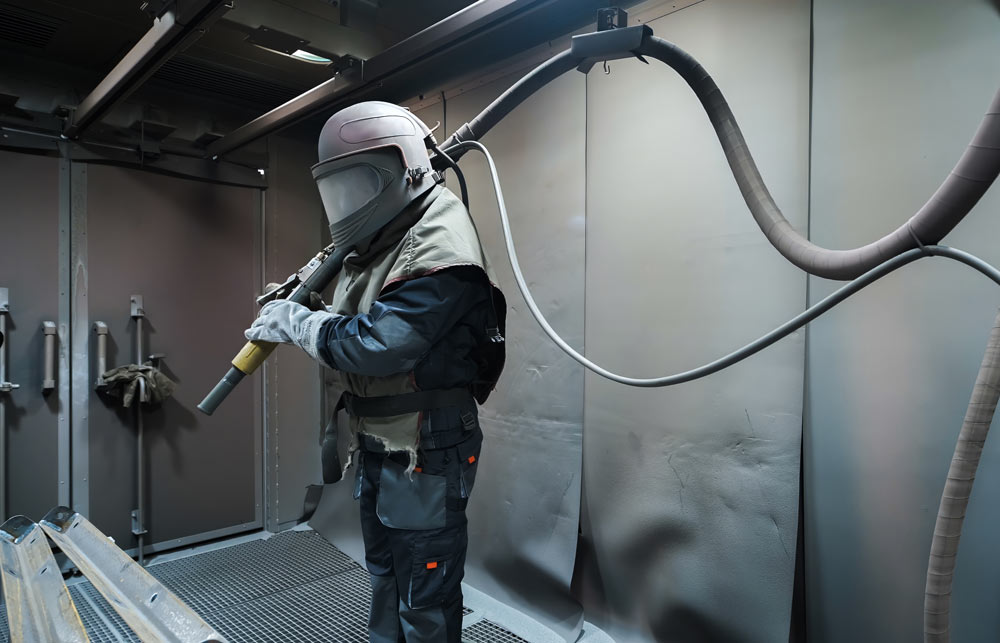
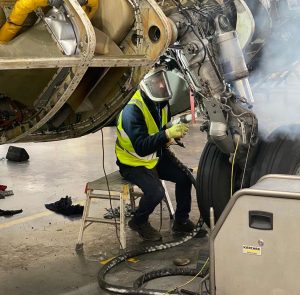
During dry ice blasting, these pellets are propelled at high speed towards a surface using compressed air. On impact, they lift contaminants away without damaging the underlying material.
It is often described as a non-abrasive method, and because there is no liquid involved, there is no additional residue left behind from the dry ice itself.
What Happens to CO₂ During the Blasting Process?
When the dry ice pellets hit a surface, they undergo a process called sublimation. This means they change directly from a solid into a gas, skipping the liquid stage entirely.
It happens almost instantly on contact, which is part of what makes the process so effective for cleaning.
As a result, the CO₂ used in blasting is released into the surrounding air as a gas. There is no leftover material from the dry ice to collect or dispose of, which can make clean-up much simpler.
What remains is only the removed contamination, rather than any additional waste from the cleaning method itself.
Where Does the CO₂ Come From Originally?
One aspect that is sometimes overlooked is where the carbon dioxide used to make dry ice actually comes from. In many cases, it is captured as a by-product from industrial processes such as ammonia production or fermentation.
Rather than being released straight into the atmosphere, this CO₂ is collected and repurposed.
Because of this, the CO₂ used in dry ice blasting is not typically produced specifically for cleaning. It is more accurate to say that it is being reused.
That distinction matters, as it suggests the process may not contribute to emissions in the same way as methods that rely on newly generated resources.
Does Dry Ice Blasting Add to Carbon Emissions?
It is reasonable to question whether releasing CO₂ during the blasting process adds to overall carbon emissions.
On the surface, it may seem like it does, as the gas is eventually released into the atmosphere. However, the situation is slightly more nuanced than that.
In many cases, dry ice blasting is considered relatively carbon neutral because it uses CO₂ that has already been captured from other processes.
That said, there are still factors such as transportation and the energy used in production that contribute to a small environmental footprint.
So while it may not be entirely impact-free, it is often seen as a more responsible option compared to alternatives.
Environmental Benefits Compared to Other Cleaning Methods
When compared to more traditional cleaning methods, dry ice blasting tends to offer several environmental advantages. For example, chemical cleaning often involves substances that can be harmful to both people and the environment if not handled correctly.
Water-based cleaning can also generate large amounts of contaminated wastewater that requires disposal.
Dry ice blasting avoids many of these issues. There are no chemicals involved, and because the dry ice sublimates, there is no secondary waste created from the cleaning media itself.
This can reduce both clean-up time and the risk of environmental contamination, which is likely why it is becoming more popular across different sectors.

Are There Any Environmental Drawbacks?
While dry ice blasting is often described as environmentally friendly, it would be slightly misleading to suggest it has no impact at all.
Producing dry ice requires energy, and transporting it to the site adds further emissions. These factors can vary depending on distance, supplier, and how efficiently the process is managed.
It is also worth noting that releasing CO₂ into enclosed spaces needs to be carefully controlled for safety reasons, although this is more of an operational consideration than an environmental one.
Overall, the method appears to strike a balance, offering a cleaner approach than many alternatives, even if it is not entirely without drawbacks.
Why Businesses Choose Dry Ice Blasting Despite CO₂ Concerns
For many businesses, the decision to use dry ice blasting comes down to practicality as much as environmental considerations.
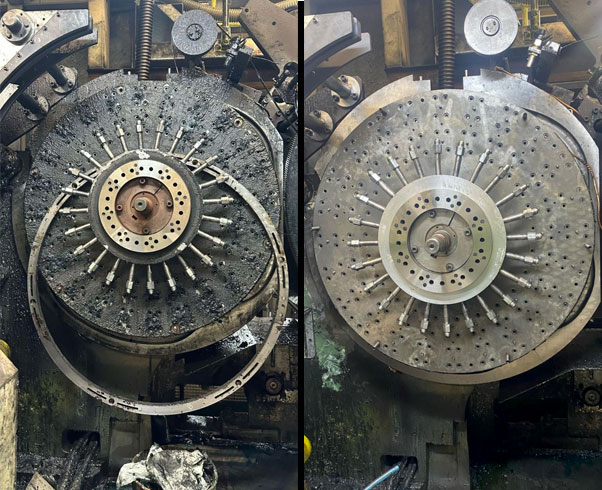
The process is efficient, often reducing downtime because machinery can be cleaned in place without the need for dismantling. That alone can make a noticeable difference in productivity.
There is also the benefit of reduced waste and simpler clean-up, which can lower overall operational costs.
When these factors are weighed against the relatively modest environmental impact, dry ice blasting often comes across as a sensible choice.
It is not perfect, but in many scenarios, it offers a good balance between performance and responsibility.
Conclusion
In simple terms, the CO₂ used in dry ice blasting turns into gas and is released into the atmosphere during the cleaning process.
There is no leftover residue from the dry ice itself, which is one of the reasons the method is considered clean and efficient.
Perhaps more importantly, the CO₂ is usually sourced from existing industrial processes, meaning it is being reused rather than newly created.
While there are still some environmental considerations to keep in mind, dry ice blasting is generally seen as a cleaner alternative to many traditional cleaning methods, particularly where reducing waste and avoiding chemicals are priorities.