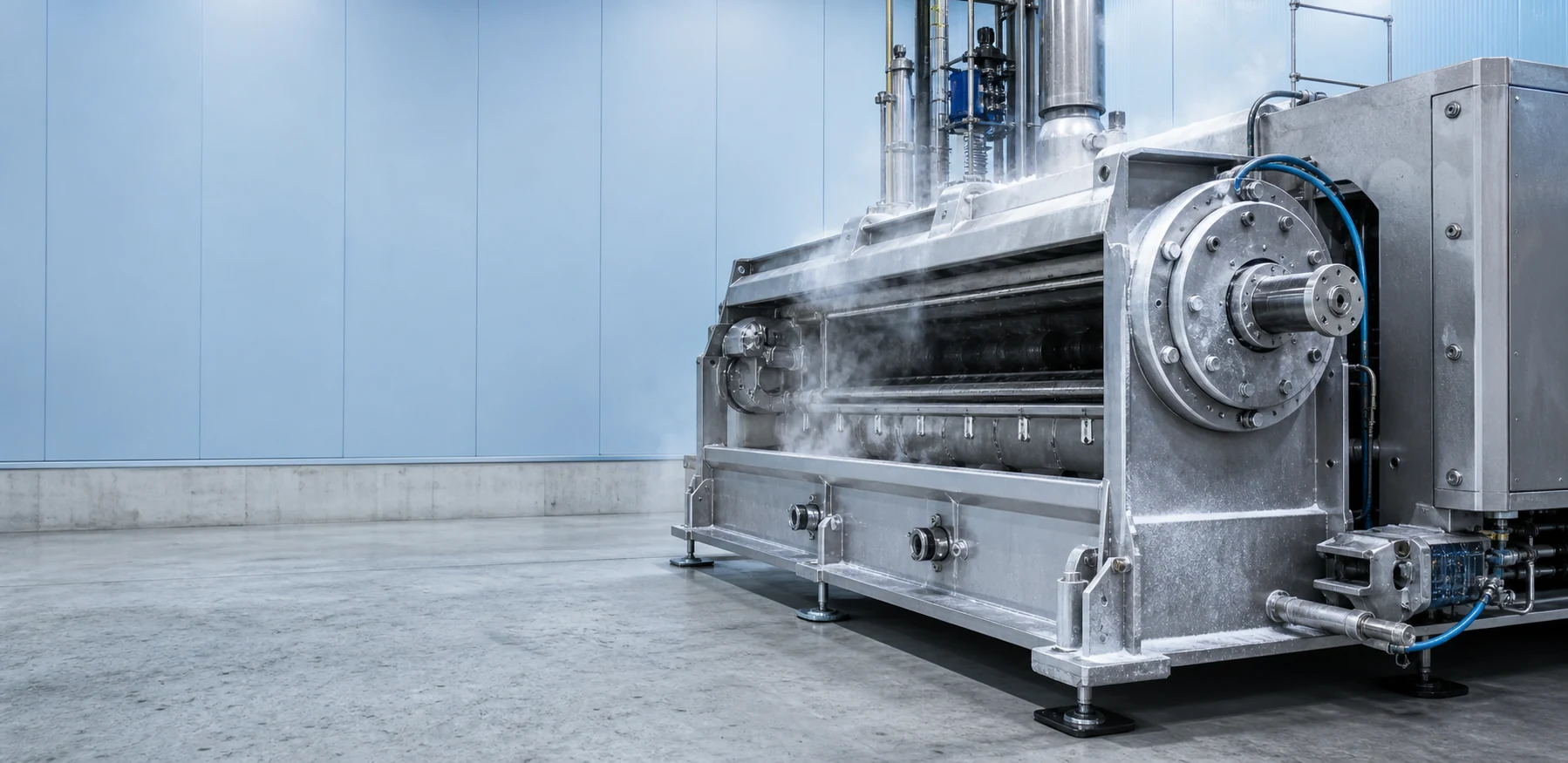
Factory machinery is rarely simple to clean. Grease, carbon, adhesive, ink, resin, dust and baked on residues can build up around guards, rollers, motors, conveyors, housings and tooling, often in places that are awkward to reach by hand.
Mobile dry ice blasting gives operators a practical way to clean fixed equipment in place. Instead of dismantling machinery for wet washing or abrasive cleaning, professional teams bring dry ice blasting services to the factory, workshop or plant room and use controlled cold vapour blasting to lift contamination from the surface.
What mobile dry ice blasting means in practice
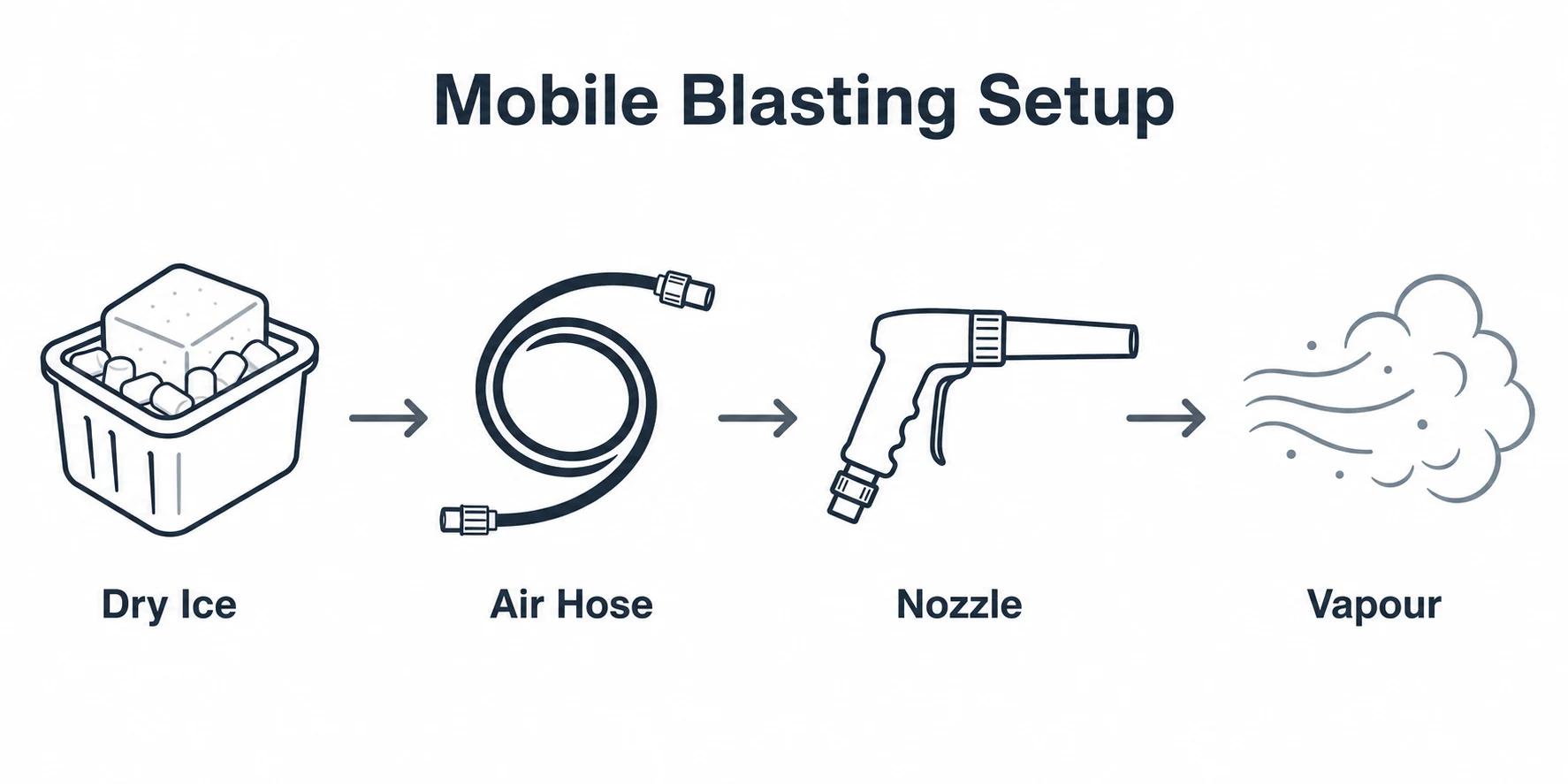
Mobile dry ice blasting is a site based cleaning method. The dry ice blasting equipment, air supply arrangements, hoses, nozzles and dry ice containers are brought to the machinery, so the cleaning can be planned around the equipment rather than the other way round.
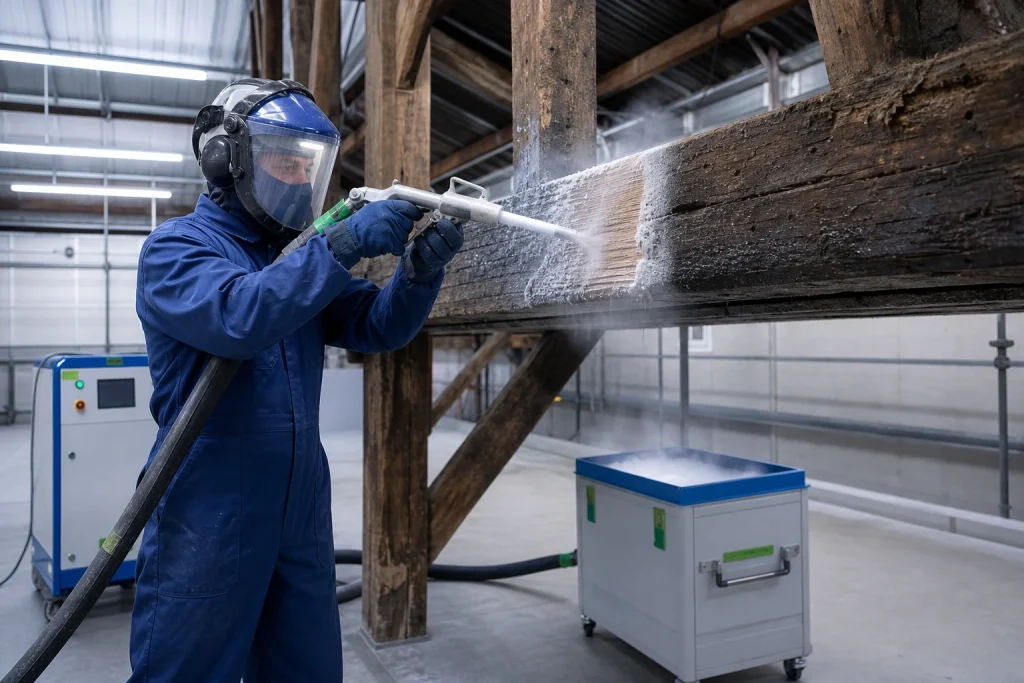
The process uses solid carbon dioxide pellets as the cleaning media. These pellets are fed into a dry ice blaster, accelerated through a hose and directed through a nozzle by a trained operator. When the pellets strike the contaminated surface, they help break the bond between the residue and the machinery. The dry ice then changes from solid to gas, leaving no spent blasting media behind.
That last point is one of the reasons dry ice cleaning is useful for industrial cleaning. With sand, grit or other abrasive media, there is usually media to collect afterwards. With dry ice, the clean up focuses mainly on the removed contamination itself. For machinery with bearings, electrical housings, panels, drive areas and tight access points nearby, reducing secondary waste can make the job more controlled and easier to manage.
For fixed machinery, the mobile nature of the service matters. Operators can work around production layouts, access restrictions and plant room conditions. Where a machine cannot realistically be moved, dry ice blasting can often be considered as part of a planned maintenance clean, shutdown clean or targeted contamination removal task.
How operators prepare the machinery and work area

A good dry ice blasting job starts before the trigger is pulled. Professional operators assess the equipment, the type of contamination, the surrounding area and the level of access available. They also consider what needs protection, what can remain in place and what should be isolated before cleaning begins.
Preparation may include checking guards and panels, confirming safe access, covering sensitive adjacent items, arranging ventilation and agreeing the working sequence. In a factory or plant room, nearby services, controls, cables and production materials all need sensible planning. The aim is not simply to blast the surface, but to clean it in a way that suits the equipment and the environment.
The dry ice containers are kept close enough for efficient loading, while hoses are routed to reduce trip risks and allow the operator to move steadily around the machine. Nozzle choice is also important. A narrow nozzle can help focus cleaning energy into a tight area, while a wider pattern may suit broader surfaces. Operators adjust their approach depending on whether they are cleaning a roller, frame, chain run, mould surface, fan housing, conveyor part or machine base.
Where the work is part of wider industrial cleaning for fixed machinery, the clean is usually planned around the condition of the equipment and the residues involved. Some areas may need a more direct pass, while others are better treated with a lighter, more controlled technique.
What happens during cold vapour blasting
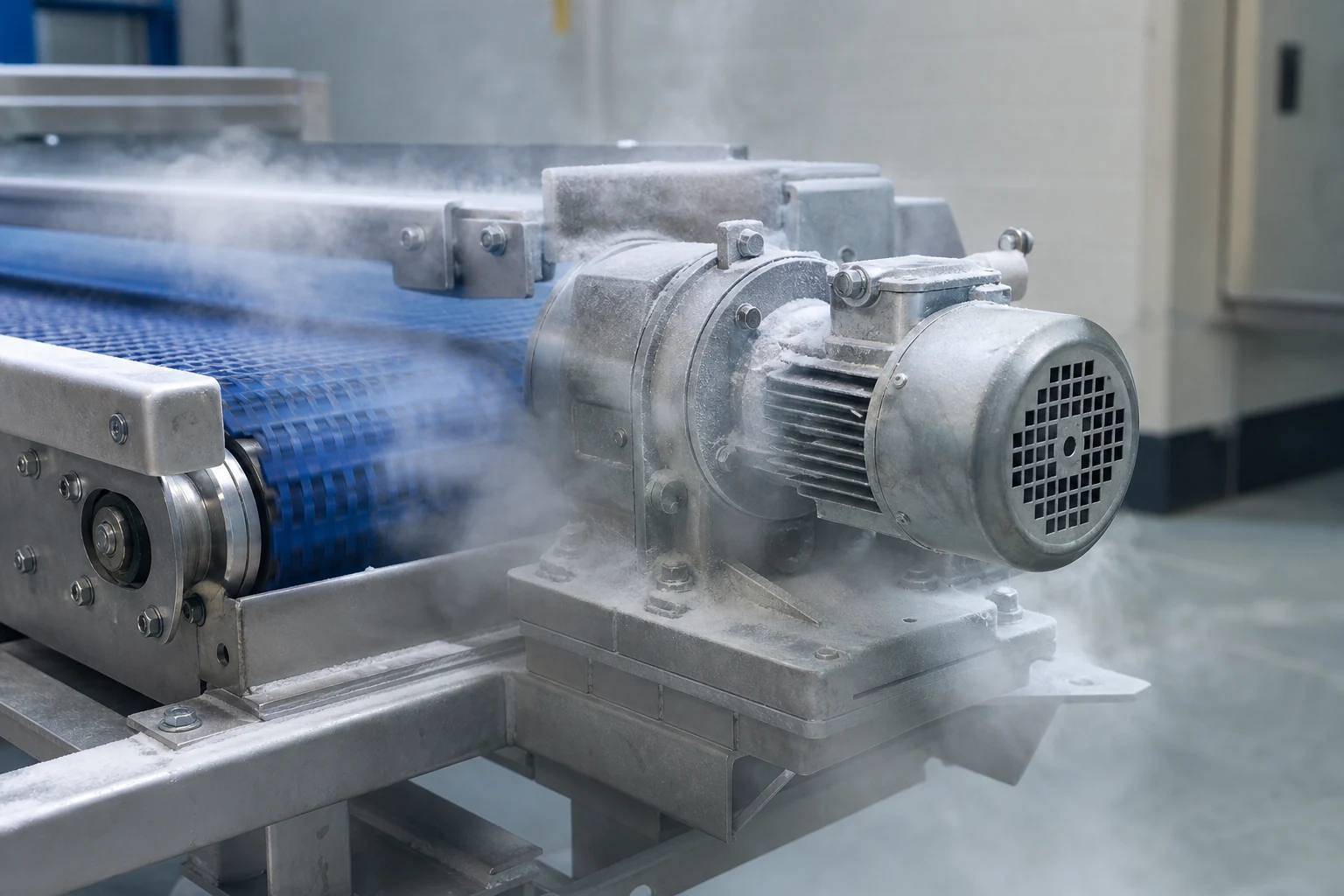
During cleaning, the operator directs the nozzle at the contaminated surface and controls the distance, angle and dwell time. The dry ice pellets travel through the hose at speed and strike the residue. The effect is mechanical and thermal. The impact helps disturb the contamination, while the cold temperature can make some residues contract or become more brittle, helping them release from the substrate.
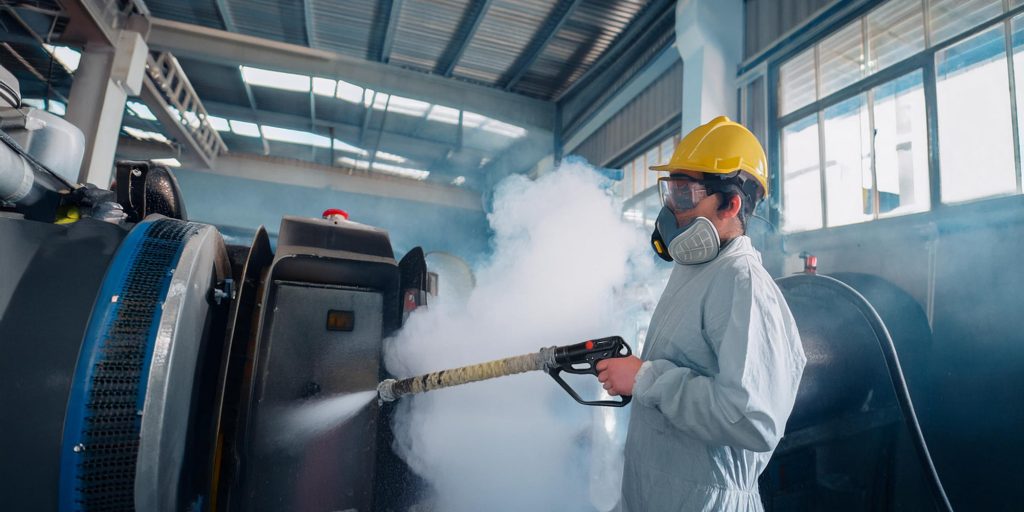
The visible vapour often associated with dry ice blasting is the result of cold carbon dioxide gas and moisture in the air. It is a normal part of the process, but it still needs to be managed properly. Operators consider airflow, visibility and safe working conditions, especially in enclosed plant rooms or areas with limited natural ventilation.
Because dry ice blasting is dry, it can be useful where water would be awkward, undesirable or difficult to remove. That does not mean every machine can be cleaned without preparation, but it gives maintenance teams another option where wet cleaning would raise concerns around drying time, corrosion, electrical proximity or residue run off.
The cleaning pattern is usually built up in controlled passes. Operators do not simply blast at random. They work methodically across the surface, adjusting the nozzle and pace as the contamination loosens. Heavy deposits may need repeated passes, while lighter surface films can often be treated more quickly. The skill is in using enough energy to remove the unwanted material while respecting the surface beneath.
Where dry ice cleaning is useful in factories and workshops
Dry ice cleaning can be considered for many types of industrial equipment, especially where residues affect performance, hygiene, inspection or maintenance access. Common candidates include conveyors, moulding equipment, print machinery, extraction components, packaging lines, motors, frames, rollers, mixing equipment, tooling and production fixtures.
The method is particularly useful where equipment is fixed in place or difficult to dismantle. A mobile dry ice blasting team can access machinery in situ and focus on the areas that need attention. This makes it suitable for planned maintenance windows, changeovers, refurbishment work and deep cleaning tasks that need a more technical approach than hand wiping.
Different sectors have different residues. Printing and paper environments, for example, can involve ink, adhesive, coating, dust and paper related build up. For that kind of setting, Gransden Ice Blasting also provides dry ice cleaning for printing and paper industry equipment, where careful residue removal can support cleaner operation and easier maintenance.
Food production environments can have their own priorities, including audit readiness, cleaning access and care around machinery surfaces. For readers looking specifically at that type of application, the article on how dry ice blasting helps food factories stay audit ready gives more context.
Why professional control matters
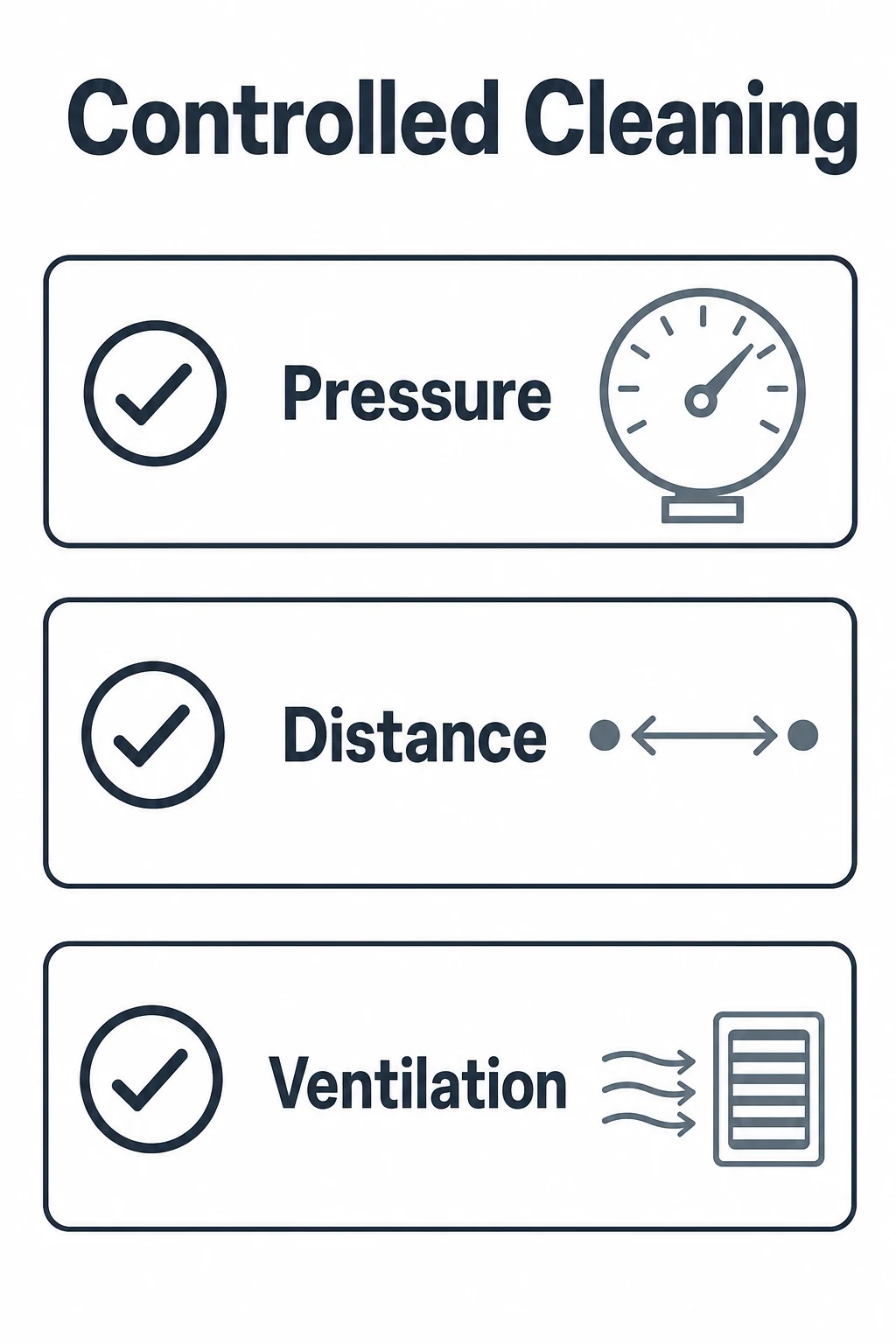
Dry ice blasting is powerful, but it is not a one setting process. The result depends on air pressure, pellet feed, nozzle selection, operator distance, angle, surface type and the nature of the contamination. Professional control matters because factory machinery can include painted surfaces, machined parts, seals, sensors, cables and delicate edges.
An experienced operator will make decisions as the clean progresses. If a residue lifts easily, the blasting can be kept lighter. If a deposit is stubborn, the operator may change the angle, work in stages or switch nozzle approach. The aim is controlled removal, not aggressive force for its own sake.
Personal protective equipment is also part of professional delivery. Operators use appropriate gloves, eye or face protection, hearing protection and practical workwear for the environment. Site rules, isolation procedures and access controls should be respected throughout the work.
Good communication with the site team is just as important. Before work starts, the operator should understand what the machinery does, which areas are most important, which parts should be avoided and what standard of clean is needed. After cleaning, the team can review the treated areas and identify any further access or maintenance points that may need attention.
How to decide if mobile dry ice blasting is the right solution
Mobile dry ice blasting is worth considering when machinery is fixed in place, contamination is difficult to remove manually, water is not ideal, or secondary blasting media would create unwanted clean up. It can also be useful when the goal is to clean detailed shapes, tight areas or complex industrial surfaces without introducing grit or moisture.
Before booking a clean, it helps to gather a few practical details. Useful information includes the type of machinery, the residue involved, the approximate size of the area, whether the equipment can be isolated, how accessible the surfaces are and whether the work needs to fit within a planned maintenance window.
Photos, equipment descriptions and a clear explanation of the problem can help a dry ice blasting provider recommend the right approach. Some jobs are best handled as targeted cleaning. Others may form part of a wider machinery clean, production area clean or maintenance programme.
For Gransden Ice Blasting, the focus is on using dry ice blasting services in a controlled, technical way. The best results come when the cleaning method, operator technique and site preparation are all matched to the machinery being cleaned.
- Mobile dry ice blasting brings the cleaning equipment to fixed factory machinery, rather than requiring machinery to be moved.
- Dry ice pellets lift contamination and then change to gas, so there is no spent blasting media left behind.
- Operators control nozzle choice, blasting angle, distance and cleaning pattern to suit the machine and residue.
- The method can help with grease, ink, adhesive, carbon, dust and other industrial build up on suitable surfaces.
- Good preparation, ventilation, isolation and site communication are essential parts of a professional clean.
Frequently asked questions
Can dry ice blasting clean machinery without dismantling it?
Often, yes. Mobile dry ice blasting is commonly considered where machinery is fixed in place or difficult to dismantle. Some access panels, guards or covers may still need to be removed if the target areas are hidden or restricted.
Does dry ice blasting leave water or grit behind?
No. Dry ice blasting is a dry process and the dry ice changes from solid to gas during cleaning. The main material left to manage is the contamination that has been removed from the machinery.
Is dry ice cleaning suitable for every machine surface?
Not automatically. Suitability depends on the surface, the residue, the condition of the equipment and nearby sensitive parts. A professional operator will assess the machinery and select a controlled approach.
What information helps before arranging dry ice blasting services?
It helps to know what the machine is, what contamination needs removing, how accessible the area is, whether the equipment can be isolated and what outcome is needed from the clean.
Need advice on machinery cleaning?
Speak to Gransden Ice Blasting about the equipment, residue and access challenges on site. The team can help you understand whether mobile dry ice blasting is a suitable option.