Aircraft maintenance plays a crucial role in ensuring both the performance and safety of every flight. Keeping components clean is essential for reliability and efficiency, but traditional cleaning methods often involve lengthy downtime, harsh chemicals, and the risk of damaging sensitive materials.
As the aviation industry continues to modernise, more operators are turning to innovative, sustainable solutions to keep their fleets in optimal condition.
One such innovation is dry ice blasting – a cleaning process that uses solid carbon dioxide pellets propelled at high speed to remove contaminants without the need for water or chemicals.
This method is revolutionising how aircraft are cleaned and maintained, offering a faster, cleaner, and more environmentally friendly approach.
What Is Dry Ice Blasting?
Dry ice blasting works by firing small pellets of dry ice (solid CO₂) at a surface using compressed air. When the pellets strike, they instantly sublimate – changing from solid to gas – creating a gentle, non-abrasive cleaning action.
This process lifts dirt, grease, paint, and other contaminants away without damaging the underlying surface.
Unlike traditional methods, dry ice blasting leaves no residue, water, or secondary waste to clean up afterwards. This makes it particularly suitable for aircraft maintenance, where cleanliness and precision are paramount.
Sensitive electrical components, intricate mechanical parts, and delicate materials can all be cleaned effectively without disassembly or risk of harm.
The Challenges of Traditional Aircraft Cleaning
Conventional aircraft cleaning often relies on chemical solvents, manual scrubbing, or water-based washing. While these approaches can remove surface contaminants, they come with significant drawbacks.
Water-based cleaning can lead to corrosion if moisture seeps into critical areas, while harsh solvents pose safety risks to maintenance staff and potential damage to aircraft coatings or components.
In addition, traditional cleaning methods are time-consuming and labour-intensive. Aircraft may need to be partially disassembled to access certain components, which can extend downtime and increase costs.
The need to properly dispose of contaminated wastewater and chemical residue adds further complexity, making the entire process less efficient and environmentally sustainable.
The Advantages of Dry Ice Blasting in Aviation Maintenance
Dry ice blasting addresses many of these challenges by providing a non-abrasive and residue-free cleaning method. It effectively removes grease, oil, carbon deposits, and even stubborn paint layers without harming metal, composite, or electrical surfaces.
The process is gentle yet powerful, maintaining component integrity while achieving a deep clean.
Because dry ice blasting eliminates the need for dismantling and drying, it significantly reduces maintenance time. Aircraft can return to service more quickly, thereby improving overall operational efficiency.
Over time, reduced labour hours, less material wear, and minimal waste disposal translate to measurable cost savings for airlines and maintenance organisations alike.
Applications in Aircraft Cleaning
The versatility of dry ice blasting means it can be used across a wide range of aviation cleaning. For engine components, it removes carbon build-up, oil, and soot from turbines and housings without the need for chemical soaking or abrasive scrubbing.
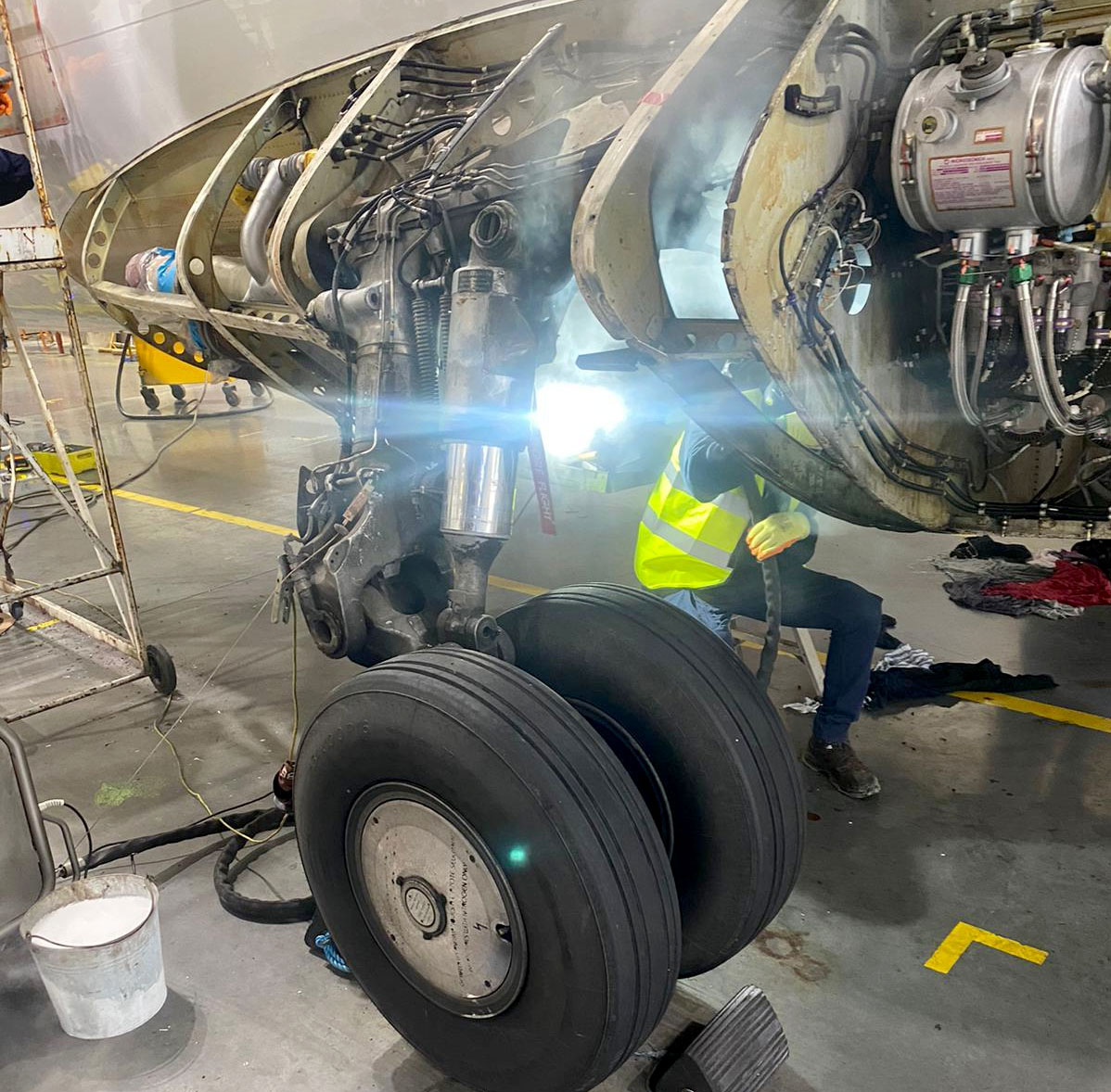
Similarly, landing gear assemblies benefit from the method’s ability to strip away hydraulic fluids and grime without damaging seals or coatings.
Externally, dry ice blasting is safe for aircraft fuselages and composite surfaces, removing contaminants without affecting paintwork or underlying materials.
It can also be used inside the cabin, where it gently cleans ventilation ducts, panels, and electrical systems without moisture intrusion. This adaptability makes it ideal for both routine cleaning and detailed restoration work.
Environmental and Safety Benefits
Dry ice blasting offers clear environmental advantages. As the CO₂ used in the process is reclaimed from existing industrial sources, it does not contribute additional greenhouse gases to the atmosphere.
The process also eliminates the use of chemical cleaners and the need for wastewater management, resulting in a far cleaner and more sustainable maintenance operation.
From a safety standpoint, dry ice blasting reduces technician exposure to hazardous solvents and fumes.
The absence of harsh chemicals improves air quality in maintenance facilities, while the dry, residue-free process minimises slip hazards and corrosion risks. For aviation businesses committed to sustainability and safety, these benefits are significant.

Real-World Results and Industry Adoption
Many maintenance, repair, and overhaul (MRO) facilities have already begun adopting dry ice blasting technology with excellent results. They report shorter cleaning cycles, lower costs, and improved consistency in their cleaning standards.
In particular, its ability to clean delicate systems without dismantling has made it a valuable asset in both scheduled and emergency maintenance operations.
Aircraft manufacturers and service providers are increasingly recognising the value of dry ice blasting as part of a modern maintenance regime.
It aligns well with industry demands for cleaner, greener, and more efficient practices, helping organisations meet both regulatory standards and sustainability goals.
The Future of Aircraft Maintenance
As dry ice blasting technology evolves, further innovations are expected. Robotic and automated systems are being developed to carry out precision cleaning in hard-to-reach areas, reducing manual labour and improving consistency.
These advancements promise to make the process even more efficient and accessible across the aviation industry.
Looking ahead, dry ice blasting will likely play an integral role in achieving the aviation sector’s environmental and operational goals.
With its proven performance and sustainability benefits, it represents a major step towards cleaner, safer, and more cost-effective aircraft maintenance practices.
Conclusion
Dry ice blasting is transforming the way aircraft are cleaned and maintained. By replacing water, chemicals, and abrasive tools with a dry, residue-free process, it reduces downtime, protects sensitive components, and supports sustainability.
The result is a faster, safer, and more effective cleaning solution that benefits both operators and the environment.
For aviation businesses seeking to modernise their maintenance operations, Gransden Dry Ice Blasting offers the expertise and technology to deliver outstanding results.
Contact our team today to learn more about how dry ice blasting can elevate your aircraft cleaning standards.